

This article is for informational purposes only and does not constitute legal, insurance, or financial advice. Insurance requirements and regulations vary by state and industry. Consult with a licensed insurance professional or attorney for guidance specific to your situation.
Why Every Florist Needs Proper Business Insurance Protection
In my 18 years advising over 600 small business clients on liability coverage, the question “what florist business insurance do I actually need?” comes up more often than you might expect. A floral shop owner with significant annual revenue asked me recently: “My walk-in cooler failed overnight, I lost thousands of dollars in inventory, and now a customer is threatening to sue because her wedding flowers never arrived—am I covered for any of this?” The answer saved her business from a devastating financial blow, but only because she had the right florist business insurance in place before disaster struck.
Here’s what many florist business owners don’t realize: the floral industry faces a unique combination of risks that standard business policies often don’t adequately address. You’re working with perishable inventory that can be destroyed by a single equipment malfunction. You’re handling sharp tools like wire cutters and floral knives daily. You’re making deliveries in company vehicles, often on tight wedding-day schedules. And perhaps most importantly, you’re providing services for once-in-a-lifetime events where a single mistake can result in substantial claims.
The total cost of risk for a typical florist extends far beyond the premium you pay. In my work with clients across various industries, I’ve observed that florists may face higher claims frequency than general retail establishments due to this unique combination of physical retail hazards, delivery exposures, and event-based service failures that can trigger both liability and professional claims.
At typical premium ranges for comprehensive florist business insurance, proper coverage generally represents a small percentage of revenue for most small to mid-sized floral operations. That coverage-to-revenue ratio is remarkably affordable when you consider that a single uninsured slip-and-fall claim can result in significant settlement costs, potentially tens of thousands of dollars, and a failed wedding delivery lawsuit can result in substantial damages when emotional distress claims are included.
Understanding your specific risks helps determine appropriate coverage levels, and that’s exactly what this guide delivers. Whether you’re operating a single retail location, running a home-based floral design studio, or managing multiple shops with delivery fleets, this comprehensive florist business insurance guide will walk you through every coverage type you need, typical costs in 2026, and exactly how to buy it.
Table of Contents
Florist Business Insurance Requirements: Essential Coverage Types Explained

Every florist business insurance program should be built on a foundation of core coverages that address the specific risks inherent to floral operations. In my experience placing coverage for hundreds of businesses, I’ve developed a coverage gap priority approach specifically for retail and service-based businesses like florists. Let me walk you through each essential coverage type and explain why it matters for your specific operation.
General Liability Insurance: Your First Line of Defense
General liability insurance protects your florist business when customers, vendors, or other third parties suffer bodily injury or property damage on your premises or as a result of your operations. For florists, this coverage is essential because you operate a retail space with regular customer traffic.
Consider this real-world claims scenario: A customer browsing your Valentine’s Day display trips over a bucket of roses left in the aisle. She falls, breaks her wrist, and requires surgery. Without general liability coverage, you’d be personally responsible for her medical bills, lost wages, and pain and suffering—costs that can quickly reach significant amounts.
Recommended Limits for Florists:
| Business Revenue | Minimum GL Limits | Recommended GL Limits |
|---|---|---|
| Under $250,000 | $500,000/$1,000,000 | $1,000,000/$2,000,000 |
| $250,000-$500,000 | $1,000,000/$2,000,000 | $1,000,000/$2,000,000 |
| $500,000-$1,000,000 | $1,000,000/$2,000,000 | $2,000,000/$4,000,000 |
| Over $1,000,000 | $2,000,000/$4,000,000 | Higher limits with umbrella |
Note: These are general recommendations. Actual requirements depend on your specific situation, landlord requirements, and contractual obligations.
General liability premiums for florists vary significantly based on location, square footage, claims history, and coverage limits. Consult with a licensed agent for quotes specific to your business.
Commercial Property Insurance: Protecting Your Physical Assets
Your florist business insurance should include commercial property coverage to protect your building (if owned), inventory, equipment, and business personal property. For florists, this coverage is particularly critical because of the specialized equipment required for operations.
The pattern I consistently observe is that florists underinsure their property coverage, particularly for refrigeration equipment and seasonal inventory spikes. A walk-in cooler alone can cost thousands to tens of thousands of dollars to replace, and your flower inventory during peak seasons like Valentine’s Day, Mother’s Day, and wedding season can increase substantially.
Key Property Coverage Components for Florists:
| Property Type | Typical Value Range | Coverage Notes |
|---|---|---|
| Walk-in cooler/refrigeration | Varies significantly | Ensure equipment breakdown included |
| Display cases and fixtures | Varies by size/quality | Replacement cost coverage preferred |
| Seasonal inventory peak | May be several times normal | Adjust limits for Valentine’s/Mother’s Day |
| Design tools and supplies | Varies by operation | Include specialty vases, containers |
| Computer systems and POS | Varies by setup | Include software and data |
Note: Actual values vary widely based on your specific equipment and inventory. Conduct a thorough valuation for accurate coverage.
Business Interruption Insurance: When Disaster Stops Operations
Business interruption coverage, sometimes called business income coverage, pays for lost revenue and ongoing expenses when a covered event forces you to temporarily close. For florists, this coverage is essential because your business is highly seasonal—losing two weeks of operation around Valentine’s Day could devastate your annual revenue.
A client with substantial annual revenue experienced a fire in an adjacent retail space that caused smoke damage to their entire inventory and forced a multi-week closure during peak spring wedding season. Their business interruption coverage paid for lost income and continuing expenses, saving them from financial catastrophe.
Products and Completed Operations Coverage
This coverage protects your florist business when products you’ve sold or services you’ve completed cause harm after leaving your possession. For florists, this means protection when:
- Floral arrangements cause allergic reactions
- Delivery personnel cause damage at customer locations
- Wedding or event installations fall and injure guests
- Toxic plant materials harm pets or children
This coverage is typically included within your general liability policy but should be specifically verified for adequate limits.
Commercial Auto Insurance: Delivery Vehicle Protection
If your florist business owns, leases, or regularly uses vehicles for deliveries, commercial auto insurance is essential. Personal auto policies typically exclude or significantly limit business use, meaning your personal coverage may not apply if your delivery driver causes an accident while transporting arrangements.
Commercial Auto Coverage Considerations for Florists:
| Coverage Type | Recommended Minimum | Why It Matters |
|---|---|---|
| Liability | $500,000 combined single limit | Protects against third-party claims |
| Collision | Actual cash value | Covers your vehicle damage |
| Comprehensive | Actual cash value | Theft, vandalism, weather |
| Uninsured motorist | State minimum or higher | Protection from uninsured drivers |
| Hired and non-owned auto | $500,000 | Covers employee personal vehicles used for business |
Note: Requirements and recommendations vary by state. Consult with a licensed agent for specific guidance.
Commercial auto premiums vary significantly based on vehicles, drivers, delivery radius, and state requirements.
Professional Liability (Errors and Omissions) Insurance
Many florists overlook professional liability coverage, but it’s increasingly important as floral design becomes more complex and customer expectations rise. E&O insurance protects you when your professional services fail to meet customer expectations or contracted requirements.
Consider this scenario: You contract to provide wedding flowers for a significant ceremony. Due to a supplier miscommunication, the requested flowers aren’t available, and you substitute without proper notification. The client sues for emotional distress and breach of contract. Professional liability coverage would defend and potentially pay this claim.
Florist Business Insurance Cost: 2026 Premium Analysis

Understanding what florist business insurance costs in 2026 requires examining the multiple factors that influence your premium. In my 18 years advising small business owners, I’ve found that premium optimization starts with understanding exactly what drives your rates.
Average Florist Business Insurance Costs by Business Size
The cost-benefit calculation reveals that comprehensive coverage is generally affordable relative to the protection provided. Here’s what florists may typically expect to pay in 2026:
Florist Business Insurance Cost Estimates by Revenue:
| Annual Revenue | BOP Premium Estimate | GL Only Estimate | Property Only Estimate | Total Package Estimate |
|---|---|---|---|---|
| Under $100,000 | $800-$1,500 | $400-$800 | $350-$700 | $1,200-$2,500 |
| $100,000-$250,000 | $1,100-$2,000 | $500-$1,000 | $500-$900 | $1,600-$3,000 |
| $250,000-$500,000 | $1,400-$2,500 | $700-$1,300 | $700-$1,200 | $2,100-$4,000 |
| $500,000-$1,000,000 | $1,800-$3,500 | $900-$1,600 | $900-$1,500 | $2,800-$5,000 |
| Over $1,000,000 | $2,800-$5,500+ | $1,200-$2,500 | $1,200-$2,200 | $4,000-$8,000+ |
IMPORTANT DISCLAIMER: These premium estimates are general market approximations only and should not be relied upon for budgeting or decision-making. Actual premiums vary significantly based on location, claims history, specific coverage limits, carrier, deductibles, and numerous other factors. Some businesses may pay significantly more or less than these ranges. Always obtain quotes from licensed insurance professionals for accurate pricing.
Premium Factors and Their Impact on Florist Business Insurance Cost
Key Florist Business Insurance Cost Factors:
| Factor | Potential Impact | Control Level | Optimization Strategy |
|---|---|---|---|
| Location (urban vs. rural) | Significant variation | Low | Consider higher deductibles in high-cost areas |
| Claims history (3-5 years) | Substantial increase with claims | Medium | Implement loss control programs |
| Annual revenue | Direct correlation | Low | Ensure accurate reporting |
| Square footage | Moderate variation | Low | Accurate measurement important |
| Number of employees | Increases with headcount | Medium | Proper training reduces risk |
| Delivery operations | Notable increase | Medium | Driver screening, safety programs |
| Years in business | Potential discount over time | Low | Longevity may be rewarded |
| Seasonal inventory peaks | Varies if underinsured | High | Adjust limits for peak seasons |
Note: Actual impact percentages vary significantly by carrier, state, and individual risk characteristics.
Business Owners Policy (BOP): A Cost-Effective Florist Business Insurance Option
For most small to mid-sized florist businesses, a Business Owners Policy (BOP) often represents a cost-effective approach for obtaining comprehensive coverage. A BOP bundles general liability and commercial property insurance into a single policy, often at less than purchasing these coverages separately.
The pattern I consistently observe is that florists with annual revenue under $1 million may get good value from a BOP, while larger operations may benefit from separate, customized policies that can be tailored more precisely to their specific risk profile.
BOP vs. Separate Policies Comparison:
| Coverage Element | BOP Approach | Separate Policies | Considerations |
|---|---|---|---|
| General liability | Included | Standalone GL | BOP may offer savings |
| Property coverage | Included | Standalone property | BOP may offer savings |
| Business interruption | Usually included | Must add separately | BOP often includes automatically |
| Customization | Limited | Highly flexible | Separate for complex needs |
| Ease of management | Single policy | Multiple policies | BOP simpler to manage |
| Best for revenue | Often under $1M | Often over $1M | Depends on complexity |
Deductible Optimization: Balancing Premium Savings with Risk Retention
Your deductible selection significantly impacts your florist business insurance cost. Higher deductibles generally mean lower premiums, but you must be prepared to pay more out-of-pocket when claims occur.
Deductible Considerations:
| Deductible Level | Premium Impact | Best For |
|---|---|---|
| $500 | Baseline (highest premium) | Businesses wanting maximum protection |
| $1,000 | Modest savings | Most small florists |
| $2,500 | Moderate savings | Established businesses with reserves |
| $5,000 | More substantial savings | Larger operations with strong cash flow |
Note: Actual savings percentages vary by carrier and coverage type. Consult with your agent for specific quotes.
In my experience placing coverage for hundreds of businesses, I recommend florists maintain adequate reserves to cover their chosen deductible. This ensures you can handle unexpected claims without financial strain.
Step-by-Step Florist Business Insurance Buying Guide

Purchasing florist business insurance doesn’t have to be overwhelming. This step-by-step buying checklist will guide you through the process, whether you’re buying coverage for the first time or reviewing your annual renewal.
Step 1: Assess Your Florist Business Risks
Before contacting any insurance provider, conduct a thorough risk assessment of your operation. Document the following:
Risk Assessment Checklist:
| Risk Category | Assessment Questions | Documentation Needed |
|---|---|---|
| Property | Building ownership or lease? Square footage? | Lease agreement, property details |
| Inventory | Average value? Seasonal peaks? Refrigeration? | Inventory records, equipment list |
| Operations | Retail only? Delivery? Events? Installations? | Service descriptions, contracts |
| Employees | Number of employees? Roles? | Payroll records, job descriptions |
| Vehicles | Owned? Leased? Employee personal vehicles used? | Vehicle list, driver information |
| Revenue | Annual revenue? Growth projections? | Tax returns, financial statements |
| Claims history | Any claims in past 5 years? | Loss runs from current insurer |
Step 2: Gather Necessary Documentation
Insurance applications require specific information. Having these documents ready streamlines the quoting process:
- Current insurance policies (declarations pages)
- Loss runs (claims history from current insurer, typically last 5 years)
- Business tax returns (2-3 years)
- Certificate of incorporation or business license
- Property lease agreement
- Vehicle registrations and driver information
- Employee count and payroll records
- Inventory valuation documentation
Step 3: Choose Your Buying Channel
You have several options for purchasing florist business insurance:
Insurance Buying Channels:
| Channel | Pros | Cons | Best For |
|---|---|---|---|
| Independent agent | Multiple carrier access, personalized service | May have minimum premium requirements | Complex needs, larger operations |
| Captive agent | Single carrier expertise, streamlined process | Limited options | Brand preference, simple needs |
| Direct from carrier | May be lower cost, simple process | Limited guidance, less customization | Basic coverage, tech-savvy buyers |
| Online marketplace | Quick quotes, easy comparison | Limited customization, less support | Price-focused, simple needs |
For most florist businesses, I recommend working with an independent agent who has experience with retail and service businesses. They can access multiple carriers and provide valuable guidance on coverage optimization.
Step 4: Request and Compare Quotes
Request quotes from at least three different sources. When comparing florist business insurance quotes, use this evaluation approach:
Quote Comparison Factors:
| Evaluation Criteria | Weight | Notes |
|---|---|---|
| Premium cost | Important | Compare apples to apples on coverage |
| Coverage limits | Very important | Ensure adequate protection |
| Deductible options | Moderate | Balance savings vs. out-of-pocket risk |
| Carrier financial rating | Important | Check A.M. Best ratings |
| Industry experience | Moderate | Familiarity with florist risks |
| Claims handling reputation | Important | Research carrier reviews |
| Policy exclusions | Important | Understand what’s not covered |
Step 5: Review Policy Terms Carefully
Before binding coverage, review your policy documents for these critical elements:
Policy Review Checklist:
- Coverage limits match your requirements
- Deductibles are as quoted
- Named insured is correctly listed
- All locations are covered
- Equipment breakdown is included (if needed)
- Seasonal inventory adjustments are addressed
- Delivery operations are covered
- Event installation coverage is included (if applicable)
- Exclusions are understood and acceptable
Step 6: Implement and Document
Once you’ve selected your florist business insurance policy:
- Pay your premium and obtain your policy documents
- Request certificates of insurance for landlords, vendors, and clients requiring them
- Create a policy summary document for easy reference
- Calendar your annual renewal review process (set reminder 60 days before renewal)
- Establish a claims documentation protocol
- Train employees on incident reporting procedures
Related Coverage Topics for Florist Businesses
A comprehensive florist business insurance program often intersects with other coverage types and industries. Understanding these related areas helps ensure your protection is complete.
Related Industry Insurance Considerations
Your florist business may share risk characteristics with other industries that have specialized insurance requirements. If you also operate related business ventures, consider how these coverages might apply.
Event-focused businesses like florists share many risk characteristics with other service providers at weddings and special events. Both industries face client satisfaction claims and equipment protection needs.
For florists who also maintain landscaping or exterior plant services, similar outdoor service risks apply, including property damage at client locations and equipment exposures.
Home-based floral designers should understand how similar home-based service businesses structure their coverage, particularly regarding in-home client visits and mobile operations.
Coverage for Florists Serving Specialized Markets
If your florist business serves specialized markets, additional coverage considerations may apply:
Florists serving nonprofit organizations should understand that nonprofits often require additional insured status and specific coverage limits.
Florists providing services to religious organizations, particularly for weddings and funerals, should be aware of specific certificate of insurance requirements these venues may have.
Florists serving veterinary clinics or pet-related businesses should consider toxic plant risks to animals.
Employment-Related Coverage Considerations
If you employ staff, workers compensation insurance requirements vary by state. Requirements differ significantly between states, and florists operating across state lines must understand their obligations in each jurisdiction. Contact your state’s Department of Insurance or workers compensation board for specific requirements.
Florist Business Insurance Coverage Gaps: What Most Flower Shops Miss

In my work with hundreds of clients, I’ve identified specific coverage gaps that florist businesses frequently overlook. These gaps often remain undetected until a claim occurs, making proactive identification essential.
Common Florist Business Insurance Gaps
Coverage Gap Assessment for Florists:
| Gap | Risk Level | Frequency | Estimated Cost to Fill | Priority |
|---|---|---|---|---|
| Refrigeration equipment breakdown | High | Very Common | Varies by equipment value | Critical |
| Seasonal inventory underinsurance | High | Very Common | Adjust limits as needed | Critical |
| Wedding/event failure coverage | High | Common | Varies by coverage limits | High |
| Employee dishonesty | Medium | Common | Generally affordable | Medium |
| Cyber liability | Medium | Very Common | Generally affordable | Medium |
| Hired and non-owned auto | High | Common | Generally affordable | High |
| Professional liability (E&O) | Medium | Common | Varies by limits | Medium |
Note: “Common” and “Frequent” indicate my observations from client work. Actual prevalence may vary.
Gap 1: Equipment Breakdown Coverage
Standard property insurance policies typically exclude mechanical or electrical breakdown of equipment. For florists, this creates a dangerous gap because walk-in coolers and display refrigeration are essential to your operation.
Equipment breakdown coverage (also called boiler and machinery coverage) fills this gap by covering repair or replacement costs when refrigeration equipment fails due to mechanical breakdown, electrical failure, or other covered causes. It may also cover spoilage of inventory due to the breakdown, subject to policy terms.
A client example: A florist client’s walk-in cooler compressor failed shortly before Valentine’s Day. Without equipment breakdown coverage, she would have lost significant inventory plus the compressor replacement cost. Her equipment breakdown endorsement covered both the equipment repair and the spoiled inventory.
Gap 2: Seasonal Inventory Fluctuation
Most florists carry significantly higher inventory during peak seasons: Valentine’s Day, Mother’s Day, Easter, and wedding season (typically May through October). Standard property coverage is set at a fixed limit that may be adequate for average inventory but insufficient during peaks.
Seasonal Inventory Adjustment Recommendation:
| Season | Typical Inventory Change | Recommended Coverage Adjustment |
|---|---|---|
| Valentine’s Day week | Significant increase | Peak season endorsement or blanket limit |
| Mother’s Day week | Significant increase | Peak season endorsement or blanket limit |
| Wedding season (May-Oct) | Sustained higher levels | Consider higher ongoing limits |
| Christmas/Holiday | Notable increase | Peak season endorsement |
Note: Actual inventory fluctuations vary widely by business. Document your specific patterns.
Gap 3: Wedding and Event Service Failure
When florists contract to provide services for weddings and major events, the stakes are high. Standard general liability typically does not cover claims arising from failure to perform contracted services—it covers bodily injury and property damage. Professional liability (E&O) coverage specifically addresses this exposure.
Gap 4: Cyber Liability Protection
If your florist business accepts credit cards, maintains customer databases, or uses computerized systems, you have cyber liability exposure. A data breach can result in notification costs, credit monitoring requirements, potential regulatory fines, and customer lawsuits.
Cyber claims can range from thousands to hundreds of thousands of dollars depending on breach severity. Cyber liability coverage is generally an affordable addition to your florist business insurance program.
Gap 5: Hired and Non-Owned Auto Coverage
Many florists allow employees to use personal vehicles for deliveries or occasionally rent vehicles for large orders. Personal auto policies typically exclude business use, and your commercial auto policy only covers vehicles you own or lease.
Hired and non-owned auto coverage fills this gap, protecting your business when employees use personal vehicles for work purposes or when you rent vehicles. This coverage is generally affordable and essential if any employee ever uses their personal vehicle for business purposes.
Florist Business Insurance Risk Mitigation Strategies
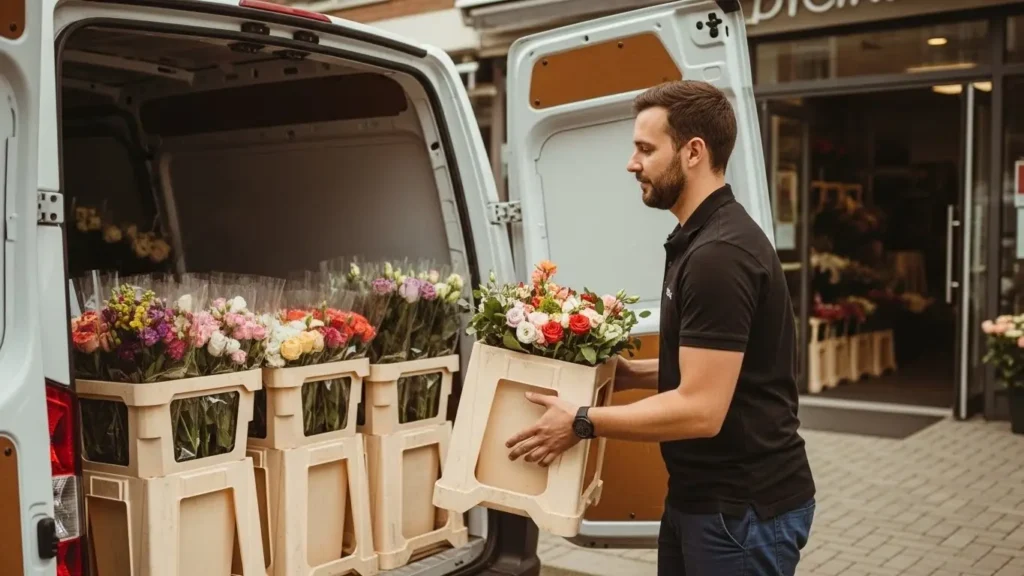
Beyond purchasing appropriate coverage, implementing risk mitigation strategies can reduce your claims frequency, lower your premiums over time, and protect your business operations.
Workplace Safety Programs for Florists
Florists face specific workplace hazards that require targeted safety measures:
Florist-Specific Safety Measures:
| Hazard | Risk Level | Mitigation Strategy | Implementation |
|---|---|---|---|
| Cutting injuries (knives, wire) | High | Cut-resistant gloves, proper tool training | Generally affordable |
| Slips and falls (water, debris) | High | Non-slip mats, immediate cleanup protocols | Generally affordable |
| Refrigeration hazards | Medium | Temperature monitoring, maintenance schedules | Varies |
| Lifting injuries | Medium | Proper lifting training, cart usage | Minimal cost |
| Chemical exposure (preservatives) | Low-Medium | Ventilation, protective equipment | Varies |
Delivery Risk Reduction
Delivery operations represent significant exposure for florists. Implement these strategies to reduce delivery-related claims:
Delivery Safety Protocols:
- Conduct MVR (motor vehicle record) checks on all drivers before hiring
- Establish maximum driving hours policies
- Consider GPS tracking for accountability and route optimization
- Require all drivers to complete defensive driving training
- Maintain regular vehicle maintenance schedules
- Create inclement weather delivery policies
- Establish clear customer delivery confirmation procedures
Contract and Documentation Best Practices
Proper contracts and documentation can help prevent claims and support your defense when claims occur:
Documentation Requirements:
- Written contracts for all event and wedding orders
- Clear cancellation and change policies
- Photograph documentation of completed arrangements
- Delivery confirmation signatures
- Customer communication records
- Supplier agreements and quality guarantees
Annual Renewal Review Process
Every florist business should conduct a comprehensive insurance review at least 60 days before policy renewal. This annual renewal review process includes:
- Reviewing claims history and identifying patterns
- Updating revenue, inventory, and employee counts
- Assessing new services or operations added
- Evaluating current coverage limits against current exposure
- Shopping competitive quotes (every 2-3 years minimum)
- Reviewing and updating certificates of insurance
Special Florist Business Situations: Unique Coverage Needs

Different florist business models create unique insurance requirements. Understanding these special situations helps ensure appropriate coverage.
Home-Based Florist Businesses
Operating a florist business from home creates specific insurance challenges. Homeowners insurance typically excludes business activities, meaning you may have no coverage for business property, client injuries, or liability arising from your floral operations.
Home-based florists typically need:
- In-home business endorsement or separate business policy
- Commercial general liability for client visits
- Business personal property coverage for inventory and equipment
- Product liability for arrangements leaving your premises
- Professional liability if providing design services
Multi-Location Florist Operations
Florists operating multiple locations face increased complexity in their florist business insurance program:
Multi-Location Considerations:
| Issue | Coverage Requirement | Notes |
|---|---|---|
| All locations listed | Property and liability | Each location should be specifically scheduled |
| Blanket vs. scheduled | Property coverage | Blanket allows flexibility; scheduled is more precise |
| Transit coverage | Inland marine | Inventory moving between locations |
| Consistent safety standards | All locations | Training, procedures, documentation |
| Centralized claims reporting | Claims management | Consider single point of contact for all locations |
Startup Florist Businesses
New florist businesses face unique challenges in obtaining adequate coverage:
- Limited claims history may result in higher initial premiums
- Revenue estimates should be as accurate as possible to avoid audit surprises
- Consider starting with a BOP to keep costs manageable
- Build relationships with a knowledgeable agent who can grow with your business
- Implement loss control measures from day one to build a positive history
Florists with Significant Event/Wedding Business
If a significant portion of your revenue comes from weddings and events, consider your florist business insurance needs carefully:
- Higher professional liability limits may be appropriate
- Event cancellation coverage to protect against weather, venue issues
- Installation floater for on-site work at venues
- Additional insured endorsements for venues and planners
- Clear contracts with payment terms and cancellation policies
Florist Business Insurance Claims: Illustrative Scenarios

Understanding how claims actually work helps florists prepare for the unexpected. These scenarios illustrate common situations and important lessons.
Claim Scenario 1: Slip-and-Fall in Retail Store
Situation: A customer slipped on water that had dripped from freshly delivered flowers. She fell, sustaining significant injuries requiring medical treatment.
Outcome: The general liability policy covered the claim, including medical expenses and settlement. The florist’s premium increased at renewal, but coverage responded as expected.
Lesson: Immediate cleanup protocols and proper floor matting could have prevented this claim. Proper incident documentation (incident report, witness statements, photos) was crucial in managing the claim effectively.
Claim Scenario 2: Wedding Flower Failure
Situation: A florist contracted to provide wedding flowers. Due to a cooler malfunction, the flowers wilted overnight before the wedding. The client obtained substitute flowers from a competitor and sued for breach of contract and additional damages.
Outcome: The florist had equipment breakdown coverage, which paid for the spoiled inventory. However, they did not have professional liability coverage, and the service failure claim was not covered by general liability.
Lesson: Equipment breakdown coverage is essential, but professional liability coverage addresses service failure claims. The total cost of risk includes both coverage and uncovered exposures.
Claim Scenario 3: Delivery Vehicle Accident
Situation: A delivery driver was involved in an accident that resulted in injuries to another party.
Outcome: The commercial auto policy defended the claim and provided coverage within policy limits. The florist implemented stricter hiring and training protocols.
Lesson: Commercial auto coverage with adequate limits is essential for florists with delivery operations. Driver screening and safety training help reduce this risk.
Claim Scenario 4: Employee Theft
Situation: An employee had been taking cash payments over an extended period, resulting in significant losses discovered during an audit.
Outcome: The florist had employee dishonesty coverage (crime insurance). After the deductible, they recovered most of the loss.
Lesson: Employee dishonesty coverage is affordable and addresses a common but often overlooked risk. Implementing cash handling controls and regular reconciliation can help prevent or detect theft earlier.
Frequently Asked Questions: Florist Business Insurance
How much does florist business insurance cost in 2026?
Florist business insurance cost varies based on your revenue, location, coverage limits, and claims history. While specific premiums vary significantly, general ranges for comprehensive coverage may include:
- Smaller florists: Lower end of premium ranges
- Medium-sized florists: Moderate premium ranges
- Larger florists: Higher premium ranges
These are general estimates only. Actual premiums depend on numerous factors including your specific location, claims history, coverage limits, and carrier. Always obtain quotes from licensed insurance professionals for accurate pricing.
What florist business insurance requirements apply to my shop?
Florist business insurance requirements vary by state, landlord requirements, and contractual obligations. While most states do not require general liability insurance for florists by law, practical requirements often include:
- Landlords typically require general liability coverage with them named as additional insured
- Wedding venues often require certificates of insurance before allowing vendor access
- Many states require workers compensation if you have employees (requirements vary by state)
- Vehicle insurance is required if you use vehicles for business
Contact your state’s Department of Insurance or consult with a licensed agent to understand specific requirements in your jurisdiction.
Do I need professional liability insurance for my florist business?
Professional liability (E&O) insurance becomes increasingly important if your florist business provides design services, works weddings and events, or enters contracts with specific performance requirements. Standard general liability covers bodily injury and property damage but typically does not cover claims arising from failure to perform contracted services.
If a client claims damages because you failed to deliver contracted wedding flowers as specified, general liability may not respond. Professional liability specifically addresses these service failure claims. Consider professional liability if you have significant event business or enter contracts with substantial values.
How can I reduce my florist business insurance premiums?
Several strategies may help optimize your florist business insurance cost without sacrificing needed coverage:
- Consider higher deductibles – May reduce premiums if you have adequate reserves
- Bundle coverages – A BOP may cost less than separate policies
- Implement loss control – Safety programs and claims-free history may reduce premiums over time
- Shop periodically – Compare quotes every 2-3 years to ensure competitive pricing
- Pay annually – Some insurers offer discounts for annual payment
- Maintain good credit – Business credit may affect commercial insurance pricing in most states
- Accurate exposure data – Overestimating revenue or square footage may increase premiums unnecessarily
What happens if my florist business has a claim?
When a claim occurs, follow these general steps:
- Ensure safety – Address any immediate hazards or injuries
- Document everything – Photos, witness information, written descriptions
- Report promptly – Contact your insurer as soon as possible (check your policy for specific timeframes)
- Cooperate fully – Provide requested documentation and access
- Don’t admit fault – Let the claims process determine liability
- Keep records – Maintain copies of all claim-related correspondence
Your insurance company will assign a claims adjuster who investigates the claim, determines coverage applicability, and works toward resolution. Prompt reporting and thorough documentation generally improve claim outcomes.
Do I need commercial auto insurance if employees use their own cars for deliveries?
Generally, yes. Personal auto policies typically exclude or limit business use, meaning your employee’s personal coverage may not fully apply if they cause an accident while delivering flowers. Your business may be held liable for accidents occurring during work activities, even in an employee’s personal vehicle.
Hired and non-owned auto coverage addresses this exposure. This endorsement or separate policy covers your business’s liability when employees use personal vehicles for business purposes or when you rent vehicles. This coverage is generally affordable and important for any florist with delivery operations.
Is home-based florist insurance different from retail shop insurance?
Yes, home-based florist businesses have unique insurance needs. Homeowners insurance typically excludes business activities, meaning you may have no coverage for:
- Business inventory and equipment in your home
- Client injuries that occur during home visits
- Liability arising from your business operations
- Business property damage from covered perils
Home-based florists typically need either an in-home business endorsement (if available and adequate) or a separate business insurance policy. Consult with a licensed agent to determine appropriate coverage.
What coverage do I need for wedding and event work?
Florists with significant wedding and event business should consider ensuring their florist business insurance includes:
- General liability with adequate limits
- Professional liability (E&O) to cover service failure claims
- Commercial auto with hired and non-owned coverage for venue deliveries
- Installation floater if you set up displays at venues
- Certificates of insurance capability to meet venue requirements
Additionally, ensure your contracts clearly specify payment terms, cancellation policies, substitution rights, and limitation of liability clauses. Strong contracts may reduce disputes and support your position if claims arise.
How often should I review my florist business insurance?
Conduct a comprehensive review at least annually, ideally 60 days before renewal. Additional reviews are warranted when:
- Your revenue changes significantly (up or down)
- You add locations, vehicles, or employees
- You begin offering new services (delivery, events, installations)
- You experience claims or near-misses
- Market conditions change (new coverage options, pricing shifts)
The annual renewal review process helps ensure your coverage keeps pace with your growing business and changing risk profile.
Coverage details, exclusions, and premiums vary by insurer, policy, and jurisdiction. Always review your specific policy documents and consult with qualified professionals before making insurance decisions.
Florist Business Insurance Action Checklist
Use this comprehensive checklist to help ensure your florist business is properly protected:
Immediate Actions (This Week)
- [ ] Locate current insurance policies and review declarations pages
- [ ] Verify coverage limits are appropriate for current exposure levels
- [ ] Confirm equipment breakdown coverage is included (if you have refrigeration)
- [ ] Check that seasonal inventory peaks are adequately covered
- [ ] Request loss runs from current insurer if shopping coverage
- [ ] Verify hired and non-owned auto coverage if employees drive
Short-Term Actions (This Month)
- [ ] Conduct risk assessment using the checklist in this guide
- [ ] Document inventory values, including peak season estimates
- [ ] Review contracts for wedding and event services
- [ ] Obtain quotes from at least three insurance sources
- [ ] Verify all delivery drivers have acceptable MVR records
- [ ] Implement incident reporting procedures for staff
Ongoing Actions (Quarterly/Annually)
- [ ] Review and update inventory valuations quarterly
- [ ] Assess coverage adequacy before each peak season
- [ ] Conduct staff safety training at least annually
- [ ] Review contracts and update as needed
- [ ] Calendar annual renewal review 60 days before renewal date
- [ ] Shop competitive quotes every 2-3 years
- [ ] Update certificates of insurance as required by landlords/venues
Documentation to Maintain
- [ ] Current policy declarations pages
- [ ] Inventory records and valuations
- [ ] Equipment list with replacement values
- [ ] Employee records and driver information
- [ ] Contract templates and signed agreements
- [ ] Incident reports and claims documentation
- [ ] Certificates of insurance (issued and received)
- [ ] Safety training records
Conclusion: Protecting Your Florist Business Investment
Your florist business represents years of hard work, creative passion, and significant financial investment. Proper florist business insurance protects all of this from the unexpected events that can threaten any business.
In my 18 years advising small business owners, I’ve seen the difference adequate coverage makes when claims occur. The florist with proper coverage who loses inventory to a cooler failure is back in business quickly. The florist without coverage may struggle to recover from that same loss.
The key takeaways for protecting your florist business:
Start with the essentials: General liability, commercial property, and business interruption coverage form the foundation of every florist business insurance program. A BOP often provides a cost-effective approach for these core coverages.
Address your specific risks: Equipment breakdown coverage is critical for protecting your refrigeration investment. Hired and non-owned auto covers your delivery exposure. Professional liability protects against service failure claims.
Don’t let gaps go unaddressed: Identify and fill gaps in your protection before claims occur. The cost to fill most gaps is generally modest compared to the potential uncovered loss.
Implement loss control measures: Risk mitigation strategies may reduce claims frequency, potentially lower premiums over time, and protect your employees and customers from harm.
Review annually: The annual renewal review process helps ensure your coverage keeps pace with your growing business.
Take action today. Review your current coverage, identify gaps, and work with a licensed insurance professional to build a florist business insurance program that protects your business.
This article provides general insurance information for educational purposes. Premium estimates represent general market approximations only and vary significantly based on your business, location, carrier, and risk profile. Consult a licensed insurance professional for personalized advice. Information current as of January 2026.