
Home based business insurance is not one product you buy off a shelf; it is a bundle you assemble to fill the gap your homeowners policy leaves open. A typical homeowners policy caps coverage for business property at about $2,500 while the items sit in your home and only $250 once they leave the property, and it generally excludes business liability entirely, according to the National Association of Insurance Commissioners. That gap is the whole story. If a client trips on your porch, or a laptop full of client files is stolen from your car, or a batch of product you sold injures someone, the standard policy you already pay for was never designed to answer for it.
The stakes rise higher than most owners expect. RLI, citing the U.S. Small Business Administration, counts more than 19 million home-based businesses in the country, and a large share of them run on the mistaken belief that a house policy stretches to cover work. It does not, and in some cases running an undisclosed business can get that house policy canceled outright.
Quick answer: Home based business insurance is a set of coverages layered on top of, or alongside, your homeowners policy to protect business property and liability that the home policy excludes. The three main paths are a homeowners endorsement for tiny operations, an in-home business policy for mid-size ones, and a Businessowners Policy for larger firms. A homeowners policy limits business property to roughly $2,500 at home and $250 off-premises, so most working businesses need more. Costs range from under $20 a year for a small endorsement to monthly premiums near $42 for general liability.
Why Your $2,500 Homeowners Sublimit Leaves a Working Business Exposed
A homeowners policy treats your business property as an afterthought, and the numbers prove it. The National Association of Insurance Commissioners states that a typical homeowners policy limits coverage for business property to about $2,500 while it is in the home and just $250 once it goes off-premises, and it generally excludes business liability. For a consultant with a single laptop that ceiling might feel adequate, right up until the day a pipe bursts over a home office holding two monitors, a printer, product inventory, and a backup drive. The replacement bill clears $2,500 fast, and everything above it comes out of pocket.
Liability is the sharper edge. The homeowners liability section answers for personal accidents, not for anyone visiting in connection with your trade. A delivery courier picking up shipments, a client arriving for a session, a contractor you hired for the business: all of them fall outside the personal liability the home policy was written to cover.
The Insurance Information Institute lays out the same warning in its guide to insuring a home-based business. Three exposures sit uncovered under a plain homeowners contract:
- Business equipment and inventory above the $2,500 in-home sublimit.
- Third-party bodily injury or property damage tied to business activity.
- Professional mistakes, bad advice, or negligence that costs a client money.
None of these is exotic. They are the ordinary risks of doing paid work from a residential address, and the ordinary homeowners policy was built to ignore all three.
The Undisclosed-Business Trap That Voids Homeowners Coverage
Running a business your insurer does not know about can do more than leave a claim unpaid; it can cancel the entire homeowners policy. Insurers underwrite a home as a residence. When commercial activity shows up during a claim investigation, and the carrier was never notified, the company can treat the omission as a material misrepresentation and rescind coverage, sometimes retroactively. The homeowners protection you counted on for the house itself, not just the business, evaporates at the moment you need it most.
This is the quiet risk the big provider pages tend to underplay. The fix is procedural and cheap: tell your homeowners carrier in writing that you operate a business from the property, and ask how they want it handled. Many will add an endorsement. Some will decline and push you toward a separate commercial policy. Either outcome beats silence.
Watch for the triggers that make disclosure non-negotiable:
- Clients, students, or customers physically visit your home.
- You store inventory or commercial equipment on the premises.
- Employees or contractors work at the address.
- You deduct a home office on your federal return, which the Internal Revenue Service documents as a paper trail of business use.
That last point matters more than people think. A home-office deduction filed with the Internal Revenue Service and a homeowners application that says nothing about a business are two records that can contradict each other when a claim gets scrutinized. Consistency across your own paperwork is a form of protection.
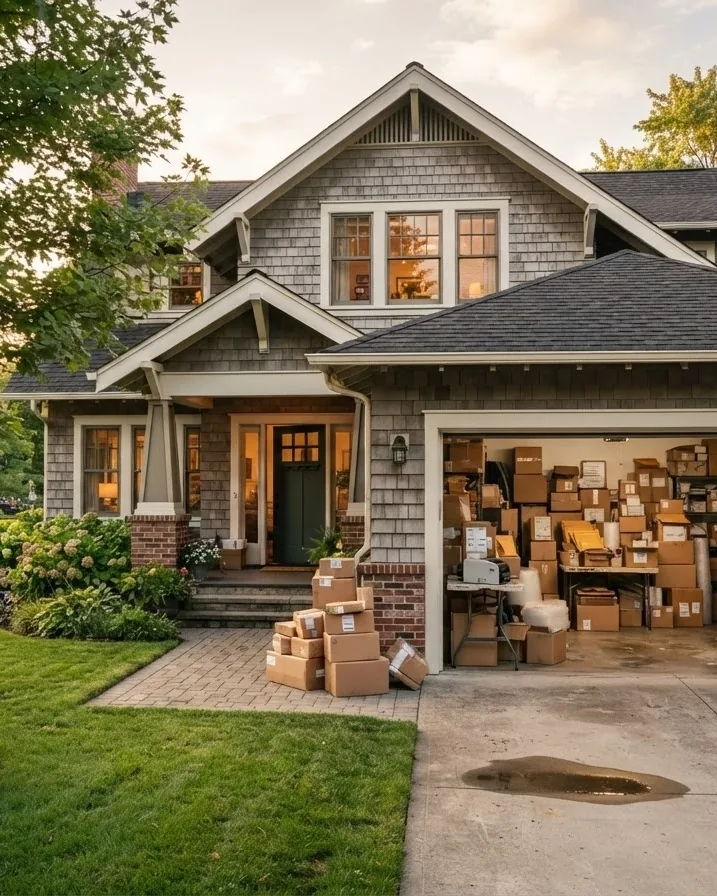

Three Coverage Paths Ranked by Receipts, Risk, and Employees
There are three ways to close the coverage gap, and they scale with the size of your operation. The cheapest is a homeowners endorsement for the smallest businesses; the middle option is a stand-alone in-home business policy; the largest is a Businessowners Policy or separate commercial contracts. Choosing correctly is mostly a question of annual receipts, whether clients visit, and whether you employ anyone. Pick the path that matches where the business is now, then revisit it as revenue grows, because outgrowing an endorsement without upgrading is how owners end up underinsured.
Path 1: The Homeowners Endorsement for Micro-Operations
For a business with very low receipts, an endorsement is often enough. The Insurance Information Institute notes you may be able to double the business-equipment limit from $2,500 to $5,000 for less than $20 a year. That option is usually capped to businesses with annual receipts around $5,000 or less, so it fits a side project, not a growing firm. It buys property headroom, not real liability protection.
Path 2: The In-Home Business Policy for Mid-Tier Firms
When the business supports client visits or holds real equipment, step up. An in-home business policy can insure business property for about $10,000 generally for under $300 a year, with a general-liability limit you choose between $300,000 and $1 million, per the Insurance Information Institute. These stand-alone policies also typically allow a small number of employees, which the endorsement route does not.
Path 3: The Businessowners Policy for Growth-Stage Companies
Larger home businesses move to a Businessowners Policy. The National Association of Insurance Commissioners explains that BOP eligibility generally covers companies with 100 or fewer employees and revenues up to $5 million. A BOP bundles property, business interruption, and liability into one contract. The Insurance Information Institute’s overview of how a Businessowners Policy works is the clearest starting point before you request quotes.
Comparing Endorsement vs In-Home Policy vs BOP Side by Side
The three paths are easiest to judge against each other on four variables: property limit, liability, price, and who qualifies. An endorsement gives you a $5,000 property limit for under $20 a year but no meaningful liability and a receipts cap near $5,000. An in-home policy gives roughly $10,000 in property for under $300 a year plus $300,000 to $1 million in general liability and room for a few employees. A BOP is the growth-stage answer, open to firms with 100 or fewer employees and revenues up to $5 million, bundling property, business interruption, and liability together.
| Path | Property limit | Liability | Fits |
|---|---|---|---|
| Homeowners endorsement | $5,000 | None meaningful | Receipts near $5,000 or less |
| In-home business policy | About $10,000 | $300,000 to $1 million | A few employees, client visits |
| Businessowners Policy | Scales | Bundled | 100 or fewer employees, up to $5M revenue |
One caveat keeps owners out of trouble. A BOP does not include everything. The National Association of Insurance Commissioners is explicit that a BOP does not cover commercial auto, workers’ compensation, health or disability, or professional liability. Those come as separate coverages, which is where the next section gets specific.

The Eight Coverage Types That Actually Fill the Gap
Home based business insurance is a bundle, and each piece answers a different failure. General liability covers third-party bodily injury and property damage, the courier who slips or the client whose property you damage. Professional liability, also called errors and omissions, covers negligence, mistakes, and bad advice that cost a client money. Commercial property covers your equipment, inventory, and tools above the homeowners sublimit. The remaining pieces address income loss, cyber exposure, vehicles, staff, and goods. You rarely need all eight, but you need to know which ones your work triggers.
Here is what each coverage answers:
- General liability: third-party bodily injury and property damage.
- Professional liability / E&O: negligence, errors, and bad advice.
- Commercial property: equipment, inventory, and tools.
- Business interruption: lost income when a covered event halts operations.
- Cyber / data-breach liability: exposure from handling sensitive client data.
- Commercial auto: business use of a vehicle, which a personal auto policy may exclude.
- Workers’ compensation: required once you have employees.
- Product liability: for anyone selling physical goods.
Business interruption deserves a flag. The National Association of Insurance Commissioners estimates that only 30 to 40 percent of small business owners carry business interruption insurance, which means most operations have no income backstop if a fire or flood shuts the home office for months. The agency’s overview of business interruption and Businessowner’s Policy coverage walks through how that gap plays out. If your household budget leans on business income, this is the coverage most likely to be missing.
Cyber sits in the same overlooked bucket. A tax preparer, bookkeeper, or any home business holding client Social Security numbers or payment data carries breach exposure that no property policy touches. The Consumer Financial Protection Bureau publishes guidance on handling consumer financial data, and the exposure it describes is exactly what cyber liability is built to cover.
Permits, Legal Requirements, and What Each Regulator Costs You
Once a home business hires anyone, insurance stops being optional. The U.S. Small Business Administration states that the federal government requires every business with employees to carry workers’ compensation, unemployment, and disability insurance, and that some states require more. That single rule converts a voluntary purchase into a legal duty the moment you make your first hire, and the SBA’s page on getting business insurance is the plain-language reference for what applies.
The regulatory map is worth understanding, because each body governs a different slice and each carries a real cost to the operator. Naming them is not decoration; knowing who sets which rule tells you where to look when a requirement is unclear.
- The U.S. Small Business Administration issues federal guidance on which insurance a business must carry and when. It does not sell coverage; it tells you the floor.
- The National Association of Insurance Commissioners coordinates the state insurance regulators who actually license carriers and enforce policy terms. State-by-state variation runs through them.
- The Internal Revenue Service governs how business income, home-office deductions, and employment taxes are reported, which is the paper trail your insurer may examine.
- The Social Security Administration administers the disability and retirement system that state disability and unemployment mandates connect to.
- The Consumer Financial Protection Bureau oversees the handling of consumer financial data, relevant to any home business touching payment or credit information.
The costs are concrete, not theoretical. Marketplace averages put general liability near $42 a month, professional liability near $49 a month, and workers’ compensation near $48 a month for home-based operations. Stack all three for a small firm with an employee and the monthly outlay clears $139, a number worth budgeting before the first payroll run rather than discovering it after.
Financial and regulatory bodies including the Securities and Exchange Commission, the Financial Industry Regulatory Authority, and the Federal Reserve set rules that touch home businesses in regulated fields such as advising, lending, or securities, and the U.S. Department of the Treasury sits above much of that framework. If your home business operates in one of those fields, your insurance requirements are heavier than a general small business, and professional liability stops being optional. For a parallel look at how professional exposure drives coverage decisions, the reference on business insurance for consultants covers the same errors-and-omissions logic in depth.
What Home Based Business Insurance Costs by Coverage Line
Price tracks risk, and the figures spread widely by coverage. At the low end, a homeowners endorsement to raise business property from $2,500 to $5,000 runs less than $20 a year, per the Insurance Information Institute. An in-home business policy insuring about $10,000 in property generally lands under $300 a year with liability limits of $300,000 to $1 million. On the standalone-coverage side, marketplace averages show general liability around $42 a month, professional liability around $49 a month, and workers’ compensation around $48 a month. Those are starting points, not quotes; your profession and claims history move them.
Five factors do most of the pushing on your premium:
- Profession and risk class: a food maker or trainer carries more physical risk than a writer.
- Employees: each hire adds workers’ compensation and raises liability exposure.
- Coverage limits: a $1 million liability limit costs more than $300,000.
- Deductibles: a higher deductible lowers the premium and raises your out-of-pocket risk.
- Claims history: prior claims signal future ones to underwriters.
Do the arithmetic before you commit. If you carry general liability at roughly $42 a month and professional liability at roughly $49 a month, that pairing alone runs about $91 a month, or roughly $1,092 a year, before property or workers’ compensation. Owners selling physical goods should also weigh product liability, and those operating storefront-style pickups or markets can compare the logic in the guide to vendor liability insurance.


Matching Coverage to Your Business Type
The right bundle depends on what you actually do, and a few common home-business profiles map cleanly to coverage. A solo consultant leans hardest on professional liability, since the main risk is bad advice, not a slip-and-fall. An e-commerce seller with inventory needs commercial property well above the $2,500 homeowners sublimit plus product liability. A home daycare or personal trainer, whose clients are physically present and at risk of injury, needs strong general liability and, once staff arrive, workers’ compensation. A caterer or food maker adds product liability on top of both.
Client visits are the single variable that changes the math most. The moment paying clients set foot in your home, the homeowners liability section stops applying to those visits, and general liability becomes the coverage standing between you and a medical claim. Two profiles deserve their own references: home food operations, covered in the guide to food business insurance requirements and costs, and home childcare, addressed in the breakdown of home daycare insurance coverage. Both carry exposures a generic home policy will not touch.
How to Buy Without Overpaying or Underinsuring
Buying well comes down to three moves: notify your homeowners insurer, gather multiple quotes, and match the coverage path to your real size. Notification protects the house policy from cancellation and often surfaces the cheapest option, since many carriers will add an endorsement in-house. Multiple quotes matter because home-business pricing varies sharply between carriers for the same risk. Matching the path prevents both errors: buying a BOP when a sub-$20 endorsement would do, or clinging to an endorsement after receipts pass its cap.
Work the process in order:
- Tell your homeowners carrier in writing that you run a business at the address.
- List your equipment value, annual receipts, employee count, and whether clients visit.
- Request quotes for the two paths that fit your size, not all three.
- Compare limits and exclusions, not just premium; a cheap policy with a low property limit is not a bargain.
Keep your records consistent across your insurer, your Internal Revenue Service filings, and any state registration. Contradictions between those documents are the openings an adjuster uses to deny a claim.
When to bring in a licensed professional: a guide can map the coverage paths, but it cannot price your specific risk or read your policy language for you. Sit down with a licensed insurance agent or broker before buying if clients or their children visit your home, if you hire your first employee, if your receipts have outgrown an endorsement cap, or if you work in a regulated field such as daycare, food preparation, or health services. Bring in an attorney when a carrier rescinds a policy or denies a claim, when a client contract demands specific liability limits, or when you form an LLC and need the coverage to match the entity. A consultation costs far less than discovering an exclusion during a claim.
Frequently Asked Questions
Does my homeowners policy cover a home business?
Only barely. A typical homeowners policy limits business property to about $2,500 in the home and $250 off-premises, and it generally excludes business liability, according to the National Association of Insurance Commissioners. Anything above those limits, plus any liability from clients or products, needs separate coverage through an endorsement, an in-home policy, or a Businessowners Policy.
How much does home based business insurance cost?
It ranges widely by path. A homeowners endorsement to reach a $5,000 property limit costs less than $20 a year, while an in-home policy insuring about $10,000 runs under $300 annually. Standalone lines average near $42 a month for general liability and $49 a month for professional liability, per marketplace and Insurance Information Institute figures.
Do I need insurance if I have no employees?
Legally, the federal workers’ compensation, unemployment, and disability requirement applies only to businesses with employees, per the U.S. Small Business Administration. With no employees you skip that mandate, but you still face property and liability gaps. General and professional liability remain strongly advisable, especially if clients visit or you give paid advice.
Can running a business cancel my homeowners policy?
Yes. If you operate a business your insurer never approved, the carrier can treat the omission as misrepresentation and cancel or rescind the homeowners policy, sometimes after a claim. The safeguard is simple: notify your homeowners insurer in writing before you start, and ask how they want the business use documented.
What is the difference between a BOP and an in-home business policy?
An in-home business policy insures roughly $10,000 in property for under $300 a year with $300,000 to $1 million in liability and room for a few employees. A Businessowners Policy is larger, open to firms with 100 or fewer employees and up to $5 million in revenue, bundling property, business interruption, and liability, though not commercial auto, workers’ compensation, or professional liability.
Does home based business insurance cover my car for deliveries?
No. Business use of a vehicle needs commercial auto coverage, which a personal auto policy and a Businessowners Policy both exclude. If you drive for deliveries, client visits, or hauling equipment, add a commercial auto line separately, since a personal policy can deny a claim once it learns the trip was for business.