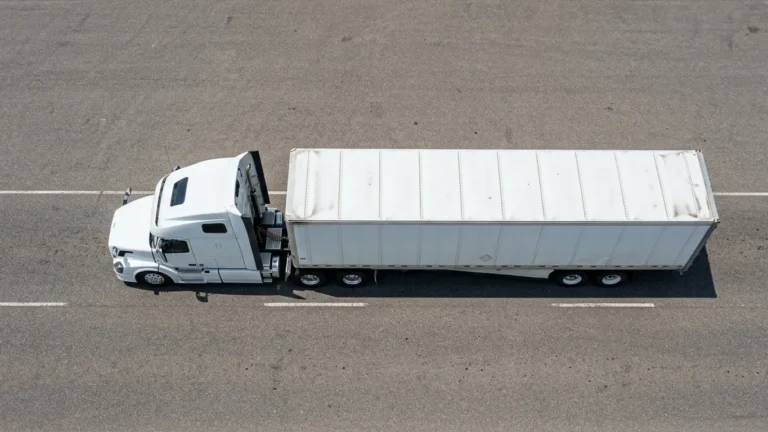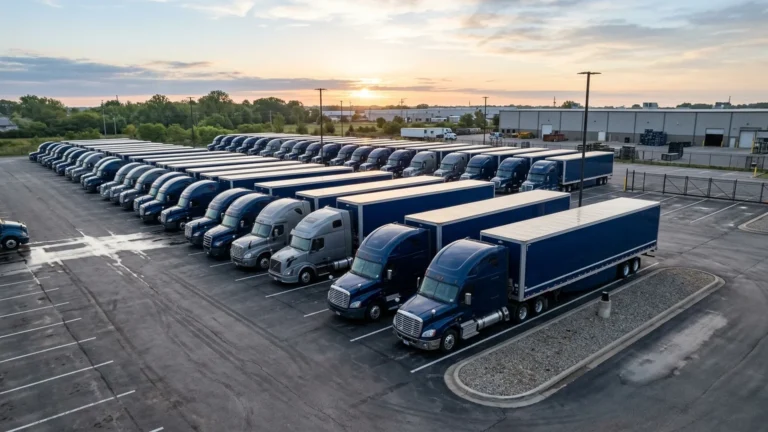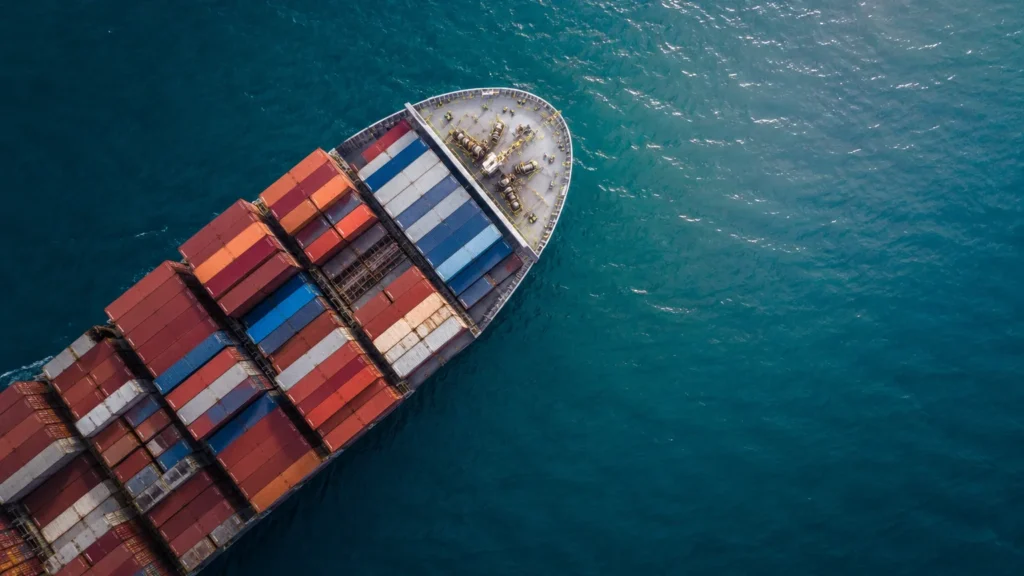
Inland marine insurance protects business property while it moves over land, sits at a temporary job site, or rests in someone else’s care. Despite the name, it has almost nothing to do with boats. It is the coverage that steps in where a standard commercial property policy stops, which is usually at the edge of your building. If your tools ride in a truck, your equipment travels between work sites, or you hold customer goods for repair, this is the line of coverage that keeps a single theft or accident from becoming a direct loss to your bottom line.
The confusion starts with the word “marine.” This policy grew out of ocean marine insurance, which covered cargo on ships. As that cargo was unloaded and hauled inland by rail and road, insurers extended protection to goods traveling on dry land. The category kept the marine label even after it drifted far from any harbor. Today it is one of the most flexible parts of a business insurance program, and one of the most overlooked.
According to the Insurance Information Institute (III) and guidance published by the International Risk Management Institute (IRMI), inland marine forms exist precisely because ordinary property policies are tied to a fixed address. This guide breaks down what the coverage includes, the specific floaters you can buy, real cost ranges, and the businesses that should not operate without it. For a broader view of premium drivers across a policy program, see our overview of business insurance cost.
What Inland Marine Insurance Is
Inland marine insurance is a form of commercial property coverage for movable property and property in transit over land. The International Risk Management Institute (IRMI) defines the category to include property in transit, movable property that does not stay at a fixed location, the instrumentalities of transportation such as bridges and roads, the instrumentalities of communication such as radio and television towers, and the legal liability of bailees who hold property belonging to others. In plain terms, if the item can travel or is held away from your main premises, an inland marine form is usually the correct home for it.
The National Association of Insurance Commissioners (NAIC) governs what qualifies through the Nationwide Marine Definition. The NAIC first adopted that definition in 1953 and revised it in 1976. The rule sets a simple test: the property must generally be movable, be in transit, or bear some real relationship to transportation or communication. That test is why a jeweler’s traveling stock, a contractor’s excavator, and a hospital’s portable imaging unit can all sit on the same broad family of policies.
Coverage is typically written on an open-peril or “all risk” basis. That means the policy responds to any cause of loss unless it is specifically excluded. Common exclusions include ordinary wear and tear, mechanical breakdown, and employee dishonesty. Covered events usually include theft, vandalism, fire, collision while in transit, and many weather-related losses at a job site.
Why Standard Property Policies Leave a Gap
A commercial property policy or a Business Owners Policy, often shortened to a BOP, is built around a location. It insures the building and the contents at the address listed on the declarations page. The moment property leaves those four walls, the coverage usually thins out or disappears. A BOP might extend a few thousand dollars to property off-premises, but that sublimit rarely matches the real value of a contractor’s rig or a photographer’s gear.
This is the gap that inland marine insurance was designed to close. Consider a general contractor whose skid steer is stolen from a job site overnight. The commercial property policy covers the shop, not the site three towns over, so the claim can be denied. An inland marine contractors equipment floater, by contrast, follows the machine wherever it works. The same logic applies to a caterer’s rented sound system, an installer’s HVAC units waiting to be mounted, or a surveyor’s laptops and drones.
The U.S. Small Business Administration (SBA) advises owners to match coverage to how the business actually operates, not just to where it is headquartered. For a mobile trade, that means insuring property in motion. Standard forms assume property stays put; inland marine forms assume it does not. That single difference explains why so many denied claims trace back to a missing floater rather than a missing policy.
What Inland Marine Insurance Covers
The line covers a wide range of property, but most exposures fall into a handful of buckets. Understanding these buckets makes it easier to see whether your own risks are addressed.
- Property in transit: goods, materials, and products while moving between locations by truck or other land transport, protecting against theft, collision, and damage on the road.
- Movable equipment: machinery and tools that travel between job sites, from generators and compressors to cameras, audio gear, and diagnostic devices.
- Tools and small equipment: the hand tools and power tools that a trade cannot work without, often insured on a blanket basis so you do not have to list every drill.
- Builders risk: a structure under construction plus the materials and supplies staged for that project, covering fire, wind, and theft during the build.
- Contractors equipment: heavy machinery such as excavators, loaders, and lifts, whether owned, rented, or borrowed.
- Bailee exposure: customer property left in your care, such as garments at a dry cleaner or watches at a jeweler, along with the legal liability that comes with holding it.
Each bucket maps to a specific floater or coverage form. A floater is simply an inland marine policy that “floats” with the property instead of staying anchored to one address. The next section walks through the floaters you are most likely to encounter and the businesses that buy them.
Common Classes and Floaters
Inland marine is not a single product. It is a menu of coverage forms, and an agent assembles the right combination for a given operation. The most common classes appear below, and most policies blend two or three of them.
- Contractors equipment floater: covers owned, rented, and leased tools and heavy equipment at any job site, in transit, or in storage.
- Installation floater: covers materials and equipment a contractor is installing, such as cabinetry, plumbing, or roofing, from delivery until the client accepts the work.
- Builders risk: covers a project during construction, including the structure and staged materials, until the building is finished or occupied.
- Motor truck cargo and transit: covers freight and goods while a business hauls them over the road.
- Bailee and bailees customer coverage: covers property that customers leave with dry cleaners, repair shops, and similar businesses.
- Jewelers block: a specialized form for jewelry retailers, wholesalers, and manufacturers that covers inventory, customer property held for repair, and items in transit to shows.
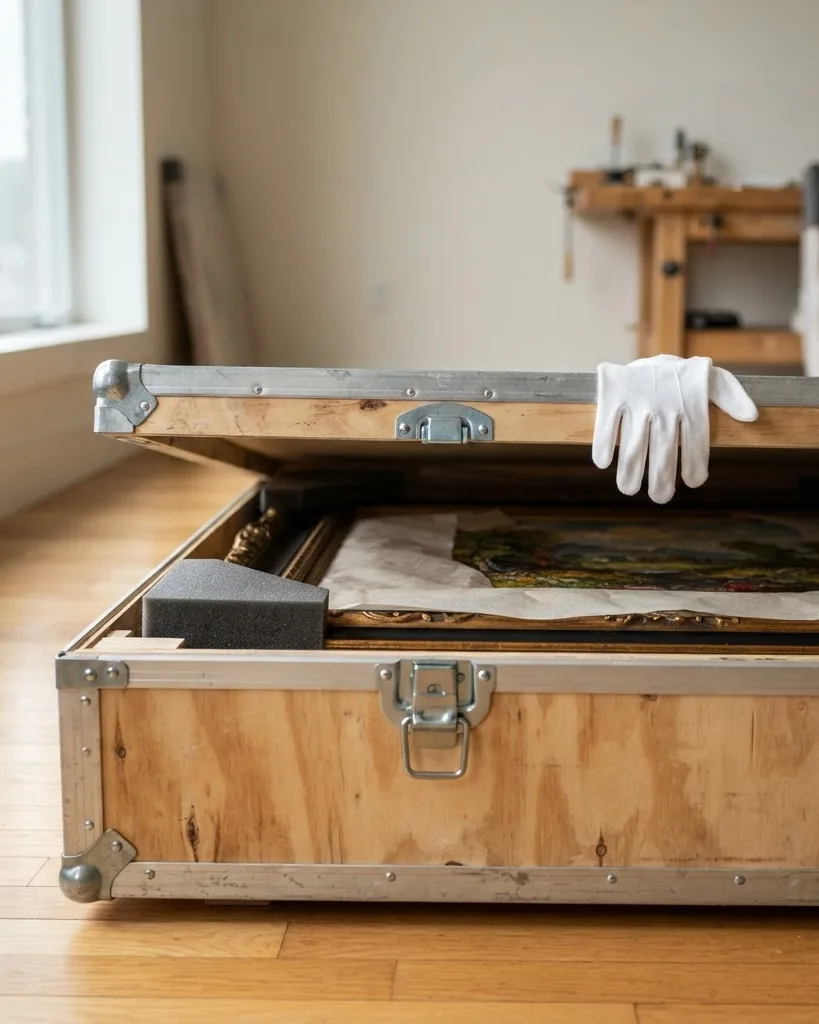
- Fine art and exhibition: covers paintings, sculpture, and collections for galleries, museums, and private owners, including transit and display.
- Computer and electronic equipment: covers laptops, servers, cameras, and audiovisual gear used away from a base office.
- Personal articles floater: a personal-lines cousin that schedules jewelry, furs, cameras, and collectibles on an open-peril basis.
Two structures cut across all of these forms. A scheduled floater lists each item, or a group of similar items, with a specific limit for each entry. That approach suits high-value, identifiable property like a single excavator or a named diamond. An unscheduled or blanket floater sets one limit that applies to any covered item within the class. Blanket coverage suits large, changing pools of similar tools where listing each piece would be impractical. Many contractors carry a blanket limit for small tools and schedule only the big machines. If a truck or trailer is part of how your equipment travels, review the interplay with our guide to commercial truck and trailer insurance, since the cargo and the vehicle are usually insured on separate forms.
How Much Inland Marine Insurance Costs
Price depends almost entirely on the value of the property you insure, along with your trade, location, and loss history. Because the property moves and varies, carriers rate the coverage on total insured value, often shown as TIV, rather than on a flat class rate. That makes the line easy to estimate once you know what your gear is worth.
Industry data gives useful anchors. Small businesses pay an average of about $48 per month for inland marine coverage, according to broker pricing surveys, while lighter exposures can run closer to $29 per month, or roughly $350 per year. Annual premiums across the market commonly range from about $150 to more than $4,500 per year. A frequently cited example is about $800 per year to insure $100,000 of property with a $1,000 deductible. Many policies start near $750 in premium and rise from there, and most carry a minimum premium around $500.
Rating often works on a per-$100 basis. Builders risk can price as low as $0.25 per $100 of value, while small tools and equipment can rate as high as $3 per $100 because they are easy to steal and hard to track. A common contractor rule of thumb charges about 4% of the value of miscellaneous unscheduled tools and about 1% of the value of scheduled tools and equipment, which is one more reason to schedule the expensive machines. Costs also swing by trade: retailers average about $137 per month while cleaners average about $42 per month, according to broker data cited by the Insurance Information Institute (III).
Deductibles for small accounts usually land between $500 and $2,500, and a higher deductible lowers the premium in exchange for more risk retained by the business. Valuation matters too. A policy written on replacement cost pays to buy new equipment, while an actual cash value form subtracts depreciation, which can cut a claim payment on older gear by a wide margin. Always confirm which basis your quote uses before comparing two prices.
Who Needs Inland Marine Insurance
Any business whose valuable property leaves a fixed address is a candidate. The clearest cases share one trait: their income depends on equipment or goods that travel, and a single loss would stall the work. The businesses below sit at the top of the list.
- Contractors and trades: builders, electricians, plumbers, landscapers, and HVAC installers who haul tools and heavy machinery to job sites.
- Jewelers: retailers and repair shops that carry high-value stock, take in customer pieces, and travel to trade shows.
- Dry cleaners and repair businesses: any bailee that holds customer property and can be liable if it is damaged or stolen.
- Medical and imaging providers: clinics and mobile services that move portable ultrasound, monitoring, or diagnostic equipment between sites.
- Galleries and museums: operators of fine art and exhibitions where damaged property may be irreplaceable.
- Photographers and media crews: owners of cameras, lenses, drones, and lighting used on location.
- Food trucks and mobile vendors: businesses whose equipment lives inside a vehicle rather than a storefront.
Retailers with warehouses, IT and audiovisual rental firms, sign companies, and shipping-dependent manufacturers round out the group. If you are still assembling a full program and want to see how this line fits beside general liability and property, compare the packages in our roundup of the best small business insurance. The U.S. Small Business Administration (SBA) recommends starting with a written inventory of movable assets and their values, since that inventory becomes the basis for both the schedule and the premium.
A Short History and Why the Name Sticks
The line makes more sense once you know where it came from. Marine insurance is one of the oldest forms of risk transfer, written for centuries on cargo crossing open water. When rail and highway networks expanded across the United States, that same cargo kept traveling after it left the dock. Insurers followed the goods inland, and the “inland marine” label was born to describe ocean-origin coverage that now applied on dry land. Over time the category absorbed almost any risk that involved movement or a link to transportation and communication.
Because the class grew so broadly, states needed a rulebook to decide what could and could not be written on a marine form. That rulebook is the Nationwide Marine Definition, maintained by the National Association of Insurance Commissioners (NAIC) and adopted by the states after 1953. The definition matters for a practical reason: property that qualifies as inland marine is often rated with more flexibility than standard property, which is part of why a jeweler or a contractor can get tailored terms. Reporting has kept pace with the market as well. Beginning with the 2024 data year, the NAIC began reporting traditional inland marine, known as Line 9.1, separately from pet insurance, tracked as Line 9.2, which had grown large enough to warrant its own line.
The market itself is sizable. One industry study valued U.S. inland marine premiums near $12.6 billion in 2024, reflecting how many trades now rely on the coverage. At the top end, some carriers write builders risk or contractors equipment limits as high as $500,000,000 per project through specialty programs, which shows the range between a painter’s tool floater and a major infrastructure build. Whether the exposure is a $5,000 camera kit or a nine-figure job site, the same underlying logic applies: the property moves, so the coverage must move with it.
How to Buy and What to Schedule
Buying inland marine coverage starts with a list. Walk the yard, the trucks, and the storage unit, and write down every piece of equipment along with its replacement value. That total insured value drives the quote. Decide which items are valuable or unique enough to schedule individually and which can sit under a blanket limit for a class of small tools.
Next, confirm the perils and the exclusions in writing. Because most inland marine forms are open peril, the exclusions define the real edges of the coverage. Ask specifically about theft from an unattended vehicle, flood and earthquake at a job site, and equipment rented from others, since those are frequent gaps. The National Association of Insurance Commissioners (NAIC) publishes consumer guidance on reading a policy’s covered and excluded causes of loss, and a broker should be able to point to the exact form numbers.
Finally, place the line correctly within the program. Inland marine covers the cargo and the gear; commercial auto covers the vehicle and its liability; general liability covers third-party injury and damage. These forms overlap at the edges, so coordination prevents both gaps and double coverage. Keep the schedule current as you buy and sell equipment, because a machine added mid-year is not automatically covered beyond any newly acquired property clause and its short time limit, which is often 30 days to 90 days.
Common Claim Scenarios
Abstract coverage terms become clear the moment a loss happens. The scenarios below reflect the kinds of claims that inland marine forms are built to answer, and each one shows where a standard property policy would have fallen short.
A remodeling contractor loads a trailer with tile, cabinetry, and $18,000 of power tools for a job 40 miles away. Overnight, thieves cut the lock and clear out the trailer. The shop’s commercial property policy covers the warehouse, not a driveway across the county, so it declines the claim. A contractors equipment floater and a tools floater respond, subtract the $1,000 deductible, and pay to replace the stolen gear so the crew is back on site within days rather than weeks.
A dry cleaner takes in a customer’s wedding gown and formalwear worth $3,500. A pipe bursts overnight and soaks the rack. The business did not own the garments, but it is legally responsible for them as a bailee. Bailees customer coverage pays the customer’s loss and protects the cleaner from an out-of-pocket settlement that could exceed a month of revenue. Without that floater, the shop would face the bill alone.
A mobile ultrasound provider transports a portable unit valued at $95,000 between three clinics each week. During a transfer, the cart tips and the probe shatters. Commercial auto would cover the van, but not the medical device inside it. An equipment floater covers the machine on a replacement-cost basis, keeping the schedule intact. These examples share one pattern: the property was moving or off-site, and inland marine was the only form positioned to pay.
Frequently Asked Questions
Is inland marine insurance the same as commercial property insurance?
No. Commercial property insurance protects buildings and contents at a fixed address, while inland marine insurance protects movable property, property in transit, and items held in a bailee’s care away from that address. The two forms work together. A business that operates only from one location may need mostly property coverage, but any operation with mobile tools, transported goods, or off-site equipment usually needs an inland marine floater to close the gap. Most owners carry both, and a broker coordinates the limits so nothing is insured twice or left exposed.
How much does inland marine insurance cost per month?
Small businesses pay an average of about $48 per month, though the range is wide. Lighter exposures can run near $29 per month, while equipment-heavy trades and retailers can pay $137 per month or more. Annual premiums commonly fall between about $150 and more than $4,500 per year, and most policies carry a minimum premium near $500. The single biggest driver is the total insured value of your property, followed by your trade, your deductible, and your claims history. Requesting quotes from two or three carriers on the same schedule and deductible is the fastest way to see your real number.
Does inland marine insurance cover tools stolen from a truck?
It usually can, but the details matter. A contractors equipment or tools floater is designed to cover theft while property is in transit or stored off-site, including from a work vehicle. Many policies, however, limit or exclude theft from an unlocked or unattended vehicle, so the exact wording controls the outcome. Confirm the theft terms, the deductible, and whether the limit is scheduled or blanket before you rely on it. The Insurance Information Institute (III) recommends documenting serial numbers and values in advance, which speeds any claim and helps prove ownership after a loss.
The Bottom Line
Inland marine insurance fills the space that a location-based property policy cannot reach: the road, the job site, and the customer’s counter. For contractors, jewelers, dry cleaners, medical providers, and anyone whose income rides on movable equipment, it is not a luxury but the coverage that keeps one theft or accident from becoming a shutdown. The pricing is straightforward once you know your total insured value, with most small accounts paying roughly $48 per month and rating built on a per-$100 basis.
Start with an honest inventory, schedule the high-value machines, blanket the small tools, and read the exclusions closely. Sources including the NAIC, the Insurance Information Institute (III), the International Risk Management Institute (IRMI), and the U.S. Small Business Administration (SBA) all point to the same conclusion: if your property moves, your coverage should move with it. Matching the policy to how the business actually runs is what turns insurance from a receipt into real protection.