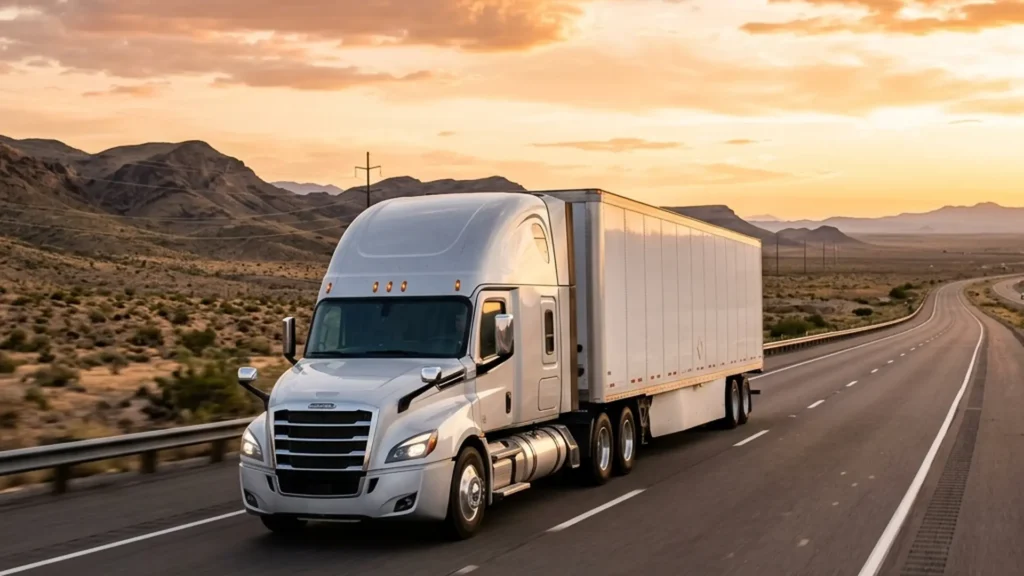
If a loaded tractor-trailer rear-ends a sedan on I-84, the medical bills, the vehicle damage, and the legal defense can run past a million dollars before the dust settles. Trucking liability insurance is the coverage that stands between that bill and your business bank account. It is also the coverage the federal government forces you to prove you carry before you can legally haul a single load across a state line.
I work commercial lines out of Hartford, and trucking accounts come across my desk every week. The recurring problem is not that operators refuse to buy coverage. It is that they buy the wrong combination, or they buy a federal minimum that satisfies a regulator but leaves them exposed where it actually counts. Owner-operators leased onto a carrier sometimes pay twice for protection they already have. New authorities sometimes file the wrong form and watch their operating authority get revoked thirty days later.
This guide breaks down what trucking liability insurance actually is, the coverage types that make it up, the FMCSA filings and federal minimums you have to meet, how the rules change between running under your own authority and leasing on, and what the whole thing costs in 2026. The numbers here are ranges, not quotes. Your premium depends on your record, your radius, your equipment, and the state you garage the truck in. Treat the figures as planning anchors and confirm specifics with a licensed commercial trucking agent.
What Trucking Liability Insurance Actually Is
Liability insurance pays for the harm you cause other people. In a trucking context that splits into two very different exposures, and conflating them is where a lot of owner-operators get burned.
The first is auto liability: bodily injury and property damage that results from operating the truck. A jackknife on a wet ramp, a missed stop sign, a tire that comes apart and crosses the median. This is the coverage the FMCSA cares about and the one brokers check before they tender a load.
The second is general liability: harm that happens away from the act of driving. A pallet jack rolls over a warehouse worker’s foot during a delivery. A customer slips at your terminal. Someone trips over a strap in the yard. Auto liability will not touch these claims because no accident on the road occurred. General liability is the policy that responds.
Both sit under the umbrella of “liability,” but they cover separate worlds. A solid trucking program usually carries primary auto liability as the legally mandated core, then layers general liability and a few specialized liability forms on top depending on how the operation is structured. If you also need to protect the truck and trailer themselves against theft, fire, or collision damage, that is physical damage coverage, a separate first-party product we cover in detail on our commercial property and physical damage hub rather than here.
The Core Coverage Types
Primary Auto Liability
This is the foundation. Primary liability pays third parties for bodily injury and property damage when you cause a crash while operating under your authority. It is the coverage the federal minimum financial-responsibility rules attach to, and it is the single largest line item in most owner-operator budgets, often 55 to 70 percent of total monthly premium.
The federal floor for general freight is $750,000. In practice, almost nobody buys that number. Brokers and shippers routinely require $1,000,000 in combined single limit before they will assign a load, so the market default has become $1 million. “Minimum to be legal” and “minimum to get freight” are two different figures, and the second one wins.
General Liability
Commercial general liability covers non-driving exposures: premises injuries, completed-operations claims, and the contractual liability some shippers and brokers write into their agreements. The Insurance Information Institute describes general liability as protection against financial loss when your business is liable for property damage or bodily injury caused by your operations, and that off-the-truck exposure is real for any operator who sets foot on a dock. FMCSA does not require it, but plenty of broker and shipper contracts do, frequently at a $1,000,000 limit. If you have ever signed a load tender, read the insurance schedule. You can read more on what this coverage includes on our general liability hub.
Non-Trucking Liability and Bobtail
These two get used interchangeably in the yard, but they are not identical, and the distinction matters when you read a policy.
- Non-trucking liability (NTL) covers you when you operate the truck for personal reasons while not under dispatch. Driving home after dropping a trailer, running to the store on a 34-hour reset.
- Bobtail liability covers you when you drive the tractor without a trailer attached, regardless of whether you are technically on dispatch.
Both exist because of a gap. When you lease onto a motor carrier, that carrier’s primary liability typically covers you only while you are under their dispatch hauling their freight. The moment you unhook and drive off the clock, that coverage can switch off. NTL and bobtail fill the hole. These are leased-operator products almost exclusively. If you run under your own authority, your primary liability is generally in force whenever the truck moves, so a standalone NTL policy is usually redundant for you.
FMCSA Filings and Federal Minimums
This is where compliance turns into paperwork, and where new carriers most often stumble. Carrying a policy is not enough. The FMCSA requires that your insurer file proof of that coverage directly with the agency on specific forms, and your operating authority stays inactive until those filings post.
The Minimum Levels of Financial Responsibility
Under 49 CFR Part 387, the required minimums scale with what and how you haul:
| Operation type | Federal minimum liability |
|---|---|
| General freight, truck over 10,001 lbs | $750,000 |
| General freight, vehicle under 10,001 lbs | $300,000 |
| Oil and certain non-hazardous bulk substances | $1,000,000 |
| Hazardous materials (most placardable) | $5,000,000 |
| Passenger carrier, 16+ seats | $5,000,000 |
| Passenger carrier, fewer than 16 seats | $1,500,000 |
The $750,000 general-freight floor has not kept pace with what a serious injury claim costs in 2026, which is exactly why the market settled on $1 million as the working standard.
BMC-91, BMC-91X, and the MCS-90
Three documents come up constantly, and operators mix them up:
- BMC-91 / BMC-91X: the public liability surety filing your insurer submits to FMCSA to prove you meet the financial-responsibility minimum. For-hire interstate carriers of property generally need this on file before authority activates. The 91X is the more common version filed by insurers.
- MCS-90: an endorsement attached to your policy, not a separate filing in the same sense. It guarantees that the public will be paid for a covered loss up to the federal minimum even if a coverage dispute exists between you and your insurer. The insurer can then seek reimbursement from you. The MCS-90 protects the public, not the trucker, and that surprises people every time.
- BMC-34 / BMC-84: cargo and broker filings, separate from liability, mentioned here only so you do not confuse them with the liability forms.
The practical takeaway: the carrier issues these filings, usually within a day or two of binding. If you switch insurers, the old filing has to be cancelled and the new one posted without a gap, or FMCSA can deactivate your authority. Lapses are one of the most common, and most avoidable, ways operators lose the option to run.
Owner-Operator Under Own Authority vs Leased-On
Your insurance needs flip almost entirely depending on whose authority you run under. This single decision drives most of the confusion I see.
Running Under Your Own Authority
You are the motor carrier. The full compliance burden is yours. You buy primary auto liability at $1 million, you carry the BMC-91X filing and MCS-90 endorsement, you keep coverage continuous, and the entity name on the policy has to match your FMCSA registration exactly. A mismatched name or a lapsed filing freezes your authority.
Beyond primary liability, an own-authority operator typically also buys general liability, cargo insurance to satisfy brokers, and physical damage if the truck is financed. You are buying the entire stack yourself because no carrier is buying any piece of it for you.
Leased Onto a Carrier
You operate under the carrier’s authority and their primary liability covers you while you are under dispatch. You do not file BMC-91X yourself and you do not carry primary liability on your own. What you do need is the gap coverage, non-trucking liability or bobtail, for the hours you are off dispatch. Your lease agreement may also require occupational accident coverage or physical damage. Read the lease before you buy anything, because it dictates exactly which policies you are responsible for and which the carrier provides.
The expensive mistake is a leased operator buying full primary liability they do not need, or an operator who just got their own authority continuing to run on bobtail-only coverage that leaves them naked the instant they are on dispatch under their own number.
A Worked Example
Consider Dana, who has driven for ten years and just pulled her own MC number. She buys a 2019 sleeper, plans to run dry van within a 500-mile radius of Springfield, and signs up with a digital freight broker that requires $1,000,000 auto liability and $100,000 cargo.
Her stack looks like this: primary auto liability at $1M with the BMC-91X filing and MCS-90 endorsement, cargo at $100,000, general liability at $1M because the broker’s contract demands it, and physical damage on the truck because the bank financed it. As a brand-new authority she pays toward the top of the range in year one, even with a clean ten-year record, because underwriters have no history of her operating as a carrier. After two to three clean years, her primary liability premium should drop meaningfully.
Now compare Marcus, who keeps his truck leased onto an established fleet. The fleet’s policy carries his primary liability while he is dispatched. He buys non-trucking liability for his off-duty driving and physical damage because he owns the tractor outright and wants it protected. His monthly liability spend is a fraction of Dana’s, because he is buying gap coverage rather than the full federal stack. Same truck, same driver skill, very different insurance bill, entirely because of authority structure.
What Trucking Liability Insurance Costs in 2026
Costs vary enough by state and profile that any single number is misleading. State of domicile alone can swing a monthly premium by well over a thousand dollars: an operator based in a low-cost state may benchmark near $300 a month while a comparable operator in a high-litigation coastal state can run past $1,700 for the same coverage. With that caveat, here are the planning ranges for 2026.
| Coverage | Who buys it | Typical 2026 annual range |
|---|---|---|
| Primary auto liability ($1M) | Own-authority operators | $8,000 – $12,000 (established) |
| Primary liability, year one | New authorities | $12,000 – $18,000+ |
| Non-trucking liability (NTL) | Leased-on operators | $350 – $1,200 |
| Bobtail liability | Leased-on operators | $240 – $720 |
| General liability | Most operators | $500 – $1,500 |
| Full own-authority stack (liability + cargo + physical damage) | Own-authority operators | $11,000 – $22,000+ |
For most independent operators, primary auto liability is the heaviest line, often $417 to $833 or more per month on its own. The full annual range for an own-authority truck running cargo and physical damage commonly lands around $900 to $1,800 a month once everything is stacked. Leased operators buying only gap coverage live in a very different, much lower band. These are ranges drawn from 2026 market reporting, not quotes. Detailed quoting walkthroughs live on our cost and quotes hub.
What Drives the Price
Underwriters are pricing the probability and severity of a claim. The factors that move your premium most:
- Authority age. New MC numbers pay the most. There is no operating history to underwrite, so carriers assume the worst until you prove otherwise. The first two to three years are the expensive ones.
- Driving and CSA history. Accidents, violations, and a poor safety score raise rates fast. A clean MVR is the cheapest discount available.
- Radius and operation type. Long-haul interstate costs more than a tight local radius. Hauling hazmat, reefer, or oversized freight raises both your required minimum and your premium.
- Equipment value and age. Newer, higher-value tractors cost more to insure on physical damage, and that feeds the overall program.
- Garaging state and ZIP. Litigation climate, traffic density, and state minimums vary enormously. Where you park the truck matters as much as how you drive it.
- Coverage limits and deductibles. Higher limits and lower deductibles cost more. The $750k-to-$1M jump is usually worth it for the freight access alone.
- Coverage continuity. A lapse signals risk and can trigger surcharges or a filing problem with FMCSA.
How to Lower Your Premium
You cannot change your domicile state on a whim, but several levers are within reach:
- Keep the MVR and CSA clean. Nothing lowers a trucking premium like a multi-year stretch without claims or violations. This is the single biggest long-term lever.
- Survive the new-authority penalty. Budget for high year-one cost and let renewals reward your history. Many operators see real drops at the two and three-year marks.
- Right-size deductibles on physical damage. Raising a deductible you can actually afford to pay out of pocket trims premium without touching your liability protection.
- Avoid coverage gaps. Renew before expiration and coordinate filing transfers carefully when switching carriers.
- Run telematics or a dashcam. Some insurers credit verified safe driving, and a dashcam can resolve disputed claims in your favor, which protects your loss history.
- Bundle thoughtfully. Placing liability, cargo, and physical damage with one specialist trucking carrier can earn package credits and simplify filings.
How to Choose Coverage
Work the decision in this order. First, settle your authority structure, because it determines whether you need the full primary-liability stack or just gap coverage. Second, identify your required federal minimum from the Part 387 schedule, then assume the market will push you to $1 million regardless. Third, read every broker and shipper contract you intend to work under and match their liability and cargo requirements, since those often exceed the federal floor. Fourth, add general liability for your off-the-truck exposure and physical damage if a lender requires it or if you simply cannot afford to replace the truck out of pocket.
Then work with a licensed agent who specializes in trucking, not a generalist. The filing mechanics around BMC-91X and the MCS-90 are unforgiving, and an agent who places these every week will keep your authority active and your coverage continuous. The SBA’s small-business insurance guidance is a useful primer on the broader coverage categories before you sit down with that agent. If you operate in an allied field, our business insurance by trade hub maps coverage to specific industries.
Frequently Asked Questions
What is the minimum trucking liability insurance required by FMCSA?
For most interstate carriers hauling general, non-hazardous freight in trucks over 10,001 pounds, the federal minimum is $750,000 in public liability coverage. Hazmat and passenger operations require far more, up to $5,000,000. In practice, most operators carry $1,000,000 because brokers and shippers require it before tendering loads. Confirm your exact requirement with the 49 CFR Part 387 schedule and a licensed agent, since rules change.
What is the difference between primary liability and non-trucking liability?
Primary liability covers you while you operate the truck for business under your authority and is the coverage the federal minimums attach to. Non-trucking liability covers you only when you drive for personal reasons while off dispatch, and it exists to fill the gap left when a leased carrier’s policy switches off after you unhook. Own-authority operators generally need primary liability; leased operators generally need non-trucking or bobtail coverage.
Do leased-on owner-operators need their own liability insurance?
Usually not for primary liability, because the carrier you lease onto provides that while you are under dispatch. What you typically need is non-trucking or bobtail liability for off-dispatch driving, and possibly physical damage and occupational accident coverage depending on your lease. Read your lease agreement closely, since it dictates which policies are your responsibility and which the carrier supplies.
How much does trucking liability insurance cost for one truck?
An established owner-operator under their own authority typically pays roughly $8,000 to $12,000 a year for $1 million in primary liability, while a brand-new authority can pay $12,000 to $18,000 or more in year one. Leased operators buying only gap coverage pay far less, often a few hundred to around a thousand dollars annually for non-trucking liability. These are ranges, not quotes; your state, record, and equipment will move the number.
What is an MCS-90 endorsement and do I need one?
The MCS-90 is an endorsement attached to your liability policy that guarantees the public will be paid for a covered loss up to the federal minimum, even if a coverage dispute exists between you and your insurer. The insurer can then seek reimbursement from you. Interstate for-hire carriers generally need it as part of meeting FMCSA financial-responsibility rules. Your trucking insurer handles the filing when you bind coverage.
This article is general information from a licensed commercial-lines advisor, not a quote or a guarantee of coverage. FMCSA requirements, state rules, and insurance pricing change and vary by operation. Confirm your specific obligations and costs with a licensed commercial trucking insurance agent and your chosen carrier before making decisions.
External resources: Insurance Information Institute on general liability, III on business vehicle insurance, and the SBA guide to business insurance.