Restaurant insurance is the bundle of policies that protects a food business from the long list of things that go wrong in a kitchen and a dining room: a customer gets sick, a fryer starts a fire, a walk-in cooler dies overnight, a slip on a wet floor, or an over-served patron causes harm after leaving. No single policy covers all of that, and the gaps between policies are where I watch good operators lose money they did not have to lose. I am Marcus Bedroix, and restaurants are one of the riskiest small businesses to insure precisely because the hazards are so varied, hot oil, alcohol, perishable inventory, heavy foot traffic, and a young, fast-moving workforce all under one roof.
This guide breaks down what restaurant insurance covers, what each piece costs, the coverages owners most often skip by accident, and how to buy a policy that actually fits your operation. I will map specific restaurant disasters to the exact policy that pays, and dig into the two coverages that cause the most uncovered claims: liquor liability and equipment breakdown. None of this is legal advice; insurance and liquor laws vary by state, so confirm the specifics with a licensed insurance agent or broker before you buy.
What Restaurant Insurance Covers
Restaurant insurance is a stack of separate coverages, and a real policy combines several. The core pieces are:
- General liability pays when a customer or visitor is hurt or their property is damaged, the slip-and-fall on a wet floor or the guest who trips over a chair.
- Commercial property covers your building improvements, kitchen equipment, furniture, and inventory against fire, theft, and many kinds of damage.
- Business owner’s policy (BOP) bundles general liability and commercial property at a discount, and usually includes business income coverage, which replaces lost revenue while you are closed after a covered loss.
- Workers’ compensation covers your staff for on-the-job injuries, which in a kitchen means burns, cuts, and slips, and is mandatory in most states once you have employees.
- Liquor liability covers harm caused by a patron you served alcohol, a coverage general liability specifically excludes.
- Food spoilage and equipment breakdown cover the inventory you lose when refrigeration fails.
- Cyber liability covers a data breach of your point-of-sale and customer payment data.
The single most useful thing to understand is that these cover completely different exposures, and carrying one does nothing for the others. A restaurant with general liability and property but no liquor liability is wide open on its alcohol risk. The Insurance Information Institute keeps a plain-language rundown of which types of business insurance you need that reinforces why a food business carries several at once.
Match the Disaster to the Policy

The fastest way to find your gaps is to map real restaurant incidents to the coverage that responds.
| What goes wrong | Policy that pays |
|---|---|
| Customer slips on a wet floor and is injured | General liability |
| Guests get food poisoning from your kitchen | General liability (and food contamination coverage) |
| Grease fire damages the kitchen and dining room | Commercial property / BOP |
| Walk-in compressor dies and spoils inventory | Equipment breakdown + spoilage |
| Line cook burns a hand on the fryer | Workers’ compensation |
| A patron you served crashes after leaving drunk | Liquor liability |
| Fire closes you for two months | Business income (inside the BOP) |
| POS breach exposes customer card data | Cyber liability |
Look at how many different policies appear. A thoughtful restaurant program covers the building, the equipment, the food, the staff, the alcohol, and the data. Bundle most of it into a BOP, add liquor liability and workers’ comp, and you have the large majority of real claims handled at a price that works.
Liquor Liability and Dram Shop Law
If you serve alcohol, this is the coverage you cannot skip, and it is the one general liability flatly excludes. Liquor liability, sometimes sold as dram shop coverage, pays when a customer you served becomes intoxicated and then injures someone, themselves, or property after leaving. Many states have dram shop laws that hold the establishment partly responsible for the harm a drunk patron causes, which means a single over-service incident can turn into a serious lawsuit against your restaurant.
Two points owners miss. First, your general liability policy will not respond to an alcohol-related claim; the liquor exclusion is standard, so without a separate liquor liability policy you are uninsured on your biggest single-event exposure. Second, many landlords and most states with strong dram shop laws effectively require liquor liability before you can serve, and some cities will not issue a liquor license without proof of it. Training your staff to recognize and cut off intoxicated patrons is not just good practice; documented responsible-service training can lower your premium and strengthen your defense if a claim ever comes.
Equipment Breakdown: The Gap That Costs Thousands
Here is the coverage nobody talks about until a compressor dies. Standard commercial property insurance pays for damage from listed perils like fire and theft. It does not pay when your walk-in cooler’s compressor simply fails, your freezer motor burns out, or an electrical surge fries your kitchen equipment, because mechanical breakdown is not a covered peril on a basic property form. Equipment breakdown coverage fills that gap, paying both to repair or replace the failed equipment and for the food that spoiled when it quit.
For a restaurant, this is real money. A walk-in failure on a Friday night can spoil $5,000 to $10,000 of inventory before anyone notices, plus the cost to fix the unit and the revenue lost over a weekend you cannot operate. Spoilage coverage handles the food; equipment breakdown handles the machine; and the two together cover the whole event. Confirm you carry both, and check whether your spoilage limit is high enough to cover a fully stocked walk-in, because the default sublimit is often lower than the inventory it is supposed to protect. The CDC’s resources on food safety are a useful reference for the temperature-control practices that prevent a breakdown from becoming a public-health problem on top of a financial one.
Food-Borne Illness and Contamination
A food poisoning claim is one of the most damaging things that can happen to a restaurant, and it has two distinct insurance sides. The liability side, where guests claim your food made them sick and sue for their medical costs, is handled by general liability and, more specifically, by food contamination or product liability coverage built into a restaurant policy. The first-party side, where you must throw out contaminated inventory, deep-clean, retest, and absorb lost income during a closure, is handled by food contamination coverage that pays your own costs, not just third-party claims.
The reputational damage is the part no policy fully repairs, which is why prevention matters as much as coverage. Strong food-safety practices, documented temperature logs, and staff hygiene training reduce both your claim odds and your premium. When you shop a policy, ask specifically how food-borne illness is covered, because the depth varies widely between carriers and the generic coverage lists on sales pages gloss over the difference between defending a lawsuit and paying for your own cleanup and closure.
Workers’ Compensation in a Fast-Moving Kitchen
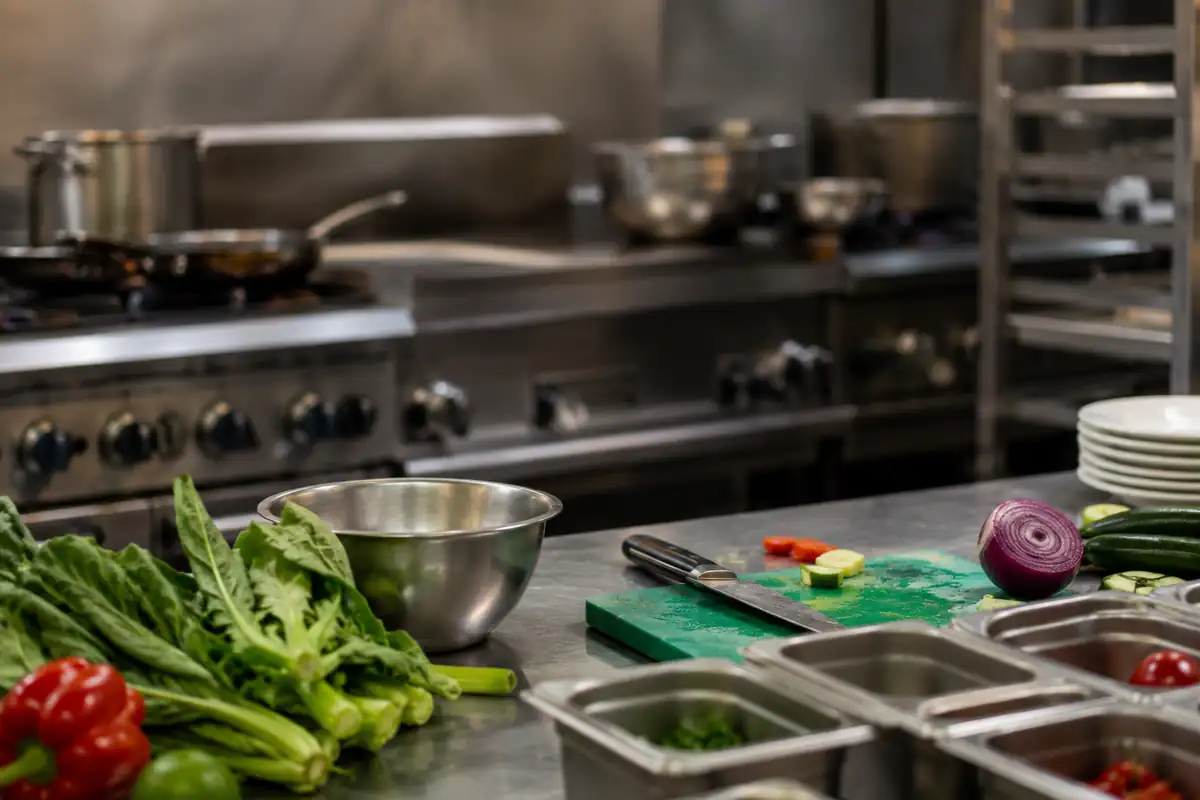
A restaurant kitchen is one of the higher-injury workplaces in small business, and workers’ compensation is the policy that handles it. Burns from fryers and flat-tops, cuts from knives and slicers, slips on greasy floors, and strains from lifting stock and hauling kegs are routine, and they happen most to a young, high-turnover staff that is still learning the room. Workers’ comp pays the medical bills and a share of lost wages for an injured employee, and just as important, it shields you from being sued directly by that worker over the injury. In most states it is mandatory the moment you hire, with the trigger varying by state.
The premium is rated per $100 of payroll by job class, so a dishwasher and a delivery driver carry different rates, and your claims history sets an experience modifier that discounts or surcharges the whole bill. The practical takeaway is that safety pays twice: fewer injuries mean a lower experience mod and a smaller premium next year, on top of a healthier crew. Slip-resistant mats, cut gloves on the prep line, and a documented training routine are cheap compared to a single serious claim, and underwriters notice when you have them in place. If you use delivery drivers, confirm how their on-road injuries and the vehicles themselves are covered, because that exposure can fall across workers’ comp and commercial auto and is easy to leave half-covered.
What a Real Restaurant Claim Looks Like
Abstract coverage only sinks in once you see how a claim plays out. Picture a Saturday-night grease fire that jumps from the fryer to the hood and into the dining room. The property and BOP coverage pays to rebuild the kitchen and replace the ruined equipment and furniture, but the bigger number is often the business income claim: the eight weeks you are closed while the space is rebuilt and re-inspected, with rent and loan payments still due and zero revenue coming in. Owners who carried property but skimped on business income survive the fire and then drown in the closure. The lesson is to set the business income period to a realistic rebuild timeline, not a hopeful one.
Now picture the quieter disaster. A walk-in compressor fails on a holiday weekend and nobody catches it until Monday. Several thousand dollars of inventory is spoiled, and the unit needs a costly repair. A restaurant with only basic property coverage gets nothing, because mechanical breakdown is not a listed peril, and the spoilage rides on equipment that was never covered for failure. A restaurant with equipment breakdown and adequate spoilage limits gets the food and the repair paid, and is back open by Tuesday. Same event, two completely different outcomes, decided months earlier by which boxes were checked on the policy. These are not rare edge cases; they are the everyday claims that separate restaurants that recover from the ones that close.
How Much Does Restaurant Insurance Cost
Here are the real ranges the carrier pages leave out. For a small restaurant, expect:
- A business owner’s policy (general liability plus property): roughly $1,500 to $4,000 a year, higher for full-service kitchens with extensive cooking equipment.
- Liquor liability: roughly $500 to $2,500 a year depending on alcohol sales as a share of revenue and your state’s dram shop exposure.
- Workers’ compensation: priced per $100 of payroll by job class, scaling with your team size.
- Equipment breakdown: often a few hundred dollars added to a package.
Your number moves on cooking equipment and fire risk, location, square footage and seating, employee count, annual revenue, alcohol sales, coverage limits, and claims history. A small cafe with no fryer and no alcohol sits at the bottom of these ranges; a full-service restaurant with a busy bar and a heavy cooking line sits well above. For the broader picture of how these policies fit a small operation and where to find savings by bundling, our guide to the best small business insurance fit walks through limits and packages.
How to Buy the Right Restaurant Policy
Start by listing your actual operation: do you fry, do you serve alcohol, do you deliver, how much inventory sits in refrigeration, and how many employees do you carry. Match coverage to each answer. From there, decide between assembling separate policies and buying a BOP that bundles the common ones, which is usually cheaper for an established restaurant, then add liquor liability, workers’ comp, and equipment breakdown on top.
When you compare quotes, look past the premium at the limits and deductibles, confirm liquor liability is included if you serve alcohol, verify your spoilage and equipment breakdown limits match your real inventory, and check that business income coverage will carry you through a realistic closure, not just a week. Confirm the policy satisfies your lease’s certificate-of-insurance requirements before you sign. The U.S. Small Business Administration’s guide to getting business insurance is a solid neutral checklist to keep beside you. If your restaurant also offers catering, events, or consulting services, you may have professional exposure worth a separate conversation; our breakdown of errors and omissions insurance cost explains how that coverage is priced.
Frequently Asked Questions
Is restaurant insurance required by law?
Workers’ compensation is required in most states once you have employees, and many states or cities require liquor liability before you can serve alcohol. Beyond that, general liability and property are not legally mandated but are almost always required by landlords and lenders, and going without them risks the whole business.
Does general liability cover alcohol-related claims?
No. General liability policies exclude liquor liability. If a patron you served becomes intoxicated and causes harm after leaving, only a separate liquor liability or dram shop policy will respond. Serving alcohol without it leaves your single biggest event exposure uninsured.
What does restaurant insurance not cover?
A standard property policy does not cover mechanical equipment breakdown without an equipment breakdown endorsement, and it excludes wear and tear, flood, and earthquake unless added. Liability policies exclude intentional acts and, for general liability, alcohol-related harm. Always read what is included before assuming a peril is covered.
How much does restaurant insurance cost?
A small restaurant typically pays roughly $1,500 to $4,000 a year for a business owner’s policy, plus $500 to $2,500 for liquor liability if it serves alcohol, plus workers’ compensation priced on payroll. The exact cost depends on cooking equipment, location, revenue, alcohol sales, and claims history.
Do I need equipment breakdown coverage?
If you rely on refrigeration, yes. Standard property insurance does not pay when a compressor or motor simply fails, only for listed perils like fire. Equipment breakdown covers the failed machine and the spoiled inventory, which for a stocked walk-in can run several thousand dollars in a single incident.
What happens if my restaurant has to close after a fire?
Business income coverage, usually part of a business owner’s policy, replaces the revenue you lose while closed for a covered loss and helps with extra expenses to reopen. Confirm the coverage period is long enough to cover a realistic rebuild, since restaurant closures after a serious fire often run months, not weeks.
Bottom Line
Restaurant insurance only works when you treat it as a stack matched to your actual operation. General liability handles the customer who falls, property and equipment breakdown handle the kitchen and the walk-in, workers’ comp handles your team, liquor liability handles the bar, and business income carries you through a closure. The most expensive mistakes are skipping liquor liability when you serve alcohol, assuming standard property covers a compressor failure, and setting spoilage and business income limits too low to match reality. Build your coverage around how you actually cook, serve, and staff, and revisit it whenever you add a bar, a kitchen line, or delivery. Because insurance and liquor laws vary by state and change over time, use this as a starting point and confirm the specifics with a licensed insurance agent or broker before you buy.