
Auto liability insurance is the coverage that pays for the injuries and property damage you cause to other people in a crash you are at fault for. It does not repair your own car or treat your own injuries; it protects everyone else on the road from your mistakes and protects your savings from a lawsuit. Almost every state requires it to register a vehicle, and it is the foundation every other car coverage is built on. The hard part is not buying it, since the legal minimum is easy to meet. The hard part is choosing limits high enough that one serious accident does not wipe you out.
What auto liability insurance covers
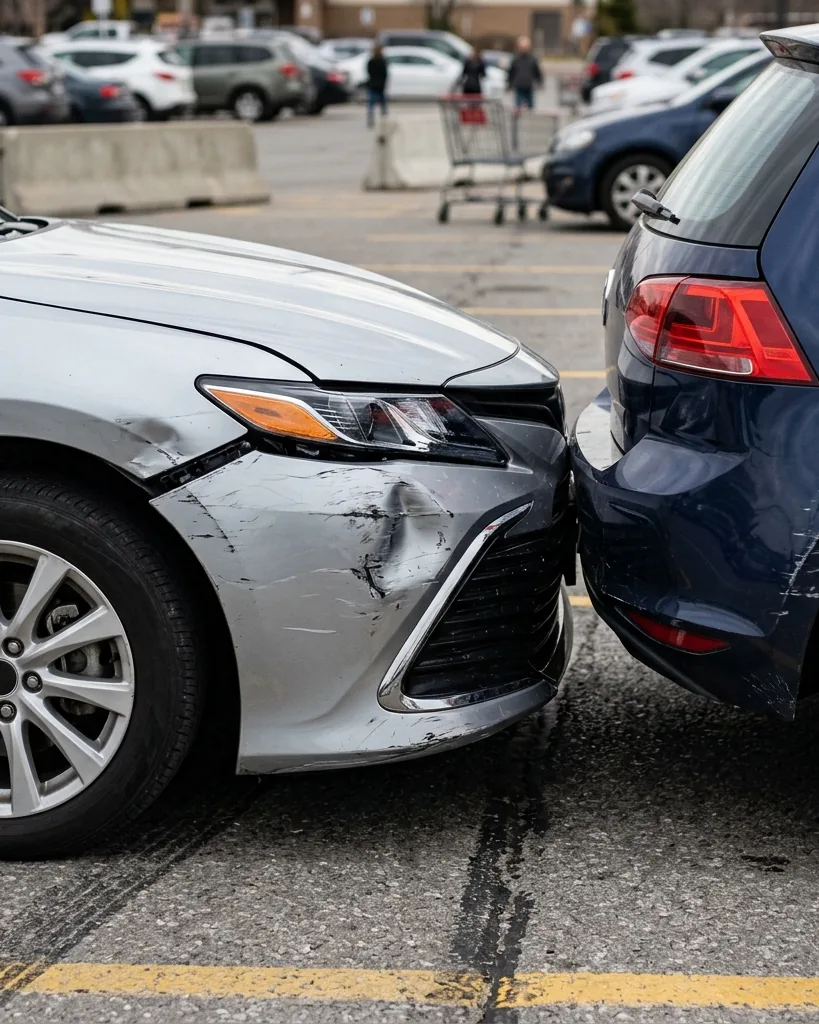
Auto liability insurance has two separate jobs, and your policy lists them as two different coverages with their own dollar limits. Together they answer the question, what do I owe other people when a crash is my fault. The first part handles the people you hurt, and the second handles the things you break. Knowing which is which makes the numbers on your declarations page readable instead of mysterious, and it tells you exactly where a cheap minimum policy will leave you exposed.
- Bodily injury liability. Pays the medical bills, rehabilitation, and lost wages of people injured in an accident you cause. If they sue, it also funds your legal defense and any settlement for pain and suffering up to the limit.
- Property damage liability. Pays to repair or replace the other driver’s vehicle, plus other property you damage such as fences, mailboxes, storefronts, or guardrails.
The Insurance Information Institute (III) describes these two coverages as the core of every auto policy, required in nearly every state before you can legally drive. They are what makes you financially responsible for the harm you cause, which is why the coverage is sometimes called financial responsibility insurance.
What auto liability insurance does not cover
This is where drivers get surprised. Liability coverage only pays other people. It does nothing for you or your own vehicle. If you cause a crash, your liability coverage repairs the other car and treats the other driver, while your own car and your own injuries are not its concern.
To protect your own vehicle you need collision and comprehensive coverage. To protect your own injuries you need medical payments or personal injury protection. And to protect yourself from a driver who has no insurance, you need uninsured and underinsured motorist coverage. Liability is the legally required base; those other coverages are what turn a bare-minimum policy into real protection. A bare liability policy is legal, but it leaves your own losses entirely on you.
Coverages that work alongside liability
Liability is one piece of a full auto policy, and it helps to see how the other common coverages fit around it. Each one answers a question liability ignores, which is your own losses. Stacking the right pieces is how drivers move from merely legal to actually protected, and it explains why two policies with the same liability limits can cost very different amounts.
- Collision. Pays to repair or replace your own car after a crash, regardless of fault. Required by most lenders if you finance or lease.
- Comprehensive. Covers non-crash damage to your car: theft, fire, hail, flooding, vandalism, and animal strikes.
- Medical payments or personal injury protection. Pays your and your passengers’ medical bills after a crash, no matter who caused it.
- Uninsured and underinsured motorist. Steps in when the at-fault driver has no insurance or too little, paying for your injuries and sometimes your vehicle.
None of these replace liability, and liability does not replace any of them. A driver who carries only the state-minimum liability limit and skips the rest is legal on paper but exposed in almost every direction, because a single at-fault crash can leave both the other party and the driver with bills no one is paying. The smarter build is adequate liability limits first, then collision, comprehensive, and uninsured-motorist coverage layered on top to match the value of the car and the driver’s own risk.
How split limits work: the 25/50/25 format
Auto liability limits are usually written as three numbers, such as 25/50/25. Each number is a separate cap measured in thousands of dollars, and they do not share one pool of money. Reading them in order tells you precisely how much the insurer will pay in three different situations, which is the single most useful thing to understand before a claim ever happens.
- 25 = $25,000 bodily injury per person. The most paid for any one injured person.
- 50 = $50,000 bodily injury per accident. The most paid for everyone’s injuries combined in one accident.
- 25 = $25,000 property damage per accident. The most paid to repair or replace property you damage.
So a 25/50/25 policy covers up to $25,000 for one injured person, up to $50,000 total for all injuries in that crash, and up to $25,000 for property damage. The most common state minimum across the country is exactly 25/50/25, which is why so many drivers carry it without a second thought.
A worked example: when 25/50/25 runs out
Numbers on a page feel abstract until a claim tests them, so here is a realistic case. You run a red light and hit a car carrying two people. Both are hospitalized, and their bills come to $40,000 each, for $80,000 in injuries. Their late-model vehicle is totaled at $45,000.
With 25/50/25, your bodily injury coverage pays a maximum of $25,000 to each person, but only $50,000 total per accident, so it covers $50,000 of the $80,000 in medical bills. Your property damage coverage pays $25,000 of the $45,000 vehicle. That leaves roughly $30,000 in unpaid medical bills and $20,000 in unpaid vehicle damage, about $50,000, that the injured parties can pursue from you personally through a lawsuit against your home, wages, and savings.
This is why so many advisers say the legal minimum is a floor, not a recommendation. A replacement vehicle commonly costs $40,000 to $50,000 on its own, more than a $25,000 property-damage cap can cover. Raising limits to something like 100/300/100 closes most of that gap for a modest premium increase.
State minimums and why they fall short
Every state except a couple sets a minimum liability limit you must carry to register and drive a vehicle, and your state Department of Insurance (DOI) publishes the exact figures and enforces them. The most common requirement is 25/50/25, though some states set it lower and a few set it higher. Meeting the minimum keeps you legal, but legal and adequate are not the same thing.
Medical costs and vehicle prices have climbed far faster than state minimums. A single hospitalization can run into six figures, and the average new vehicle now costs well above the typical $25,000 property-damage minimum. When the damages exceed your limits, you are personally responsible for the rest. That exposure, not the monthly premium, is the real reason to look past the minimum.
The risk is not theoretical. The National Highway Traffic Safety Administration (NHTSA) tracks millions of crashes a year, and the Insurance Institute for Highway Safety (IIHS) documents how severe and expensive serious collisions have become. A multi-vehicle crash with injuries can easily generate claims in the hundreds of thousands of dollars, far beyond any state-minimum policy. Carrying limits that match modern costs is the only way to keep a bad day from becoming a financial catastrophe.
What affects your auto liability premium
Two drivers can carry the exact same 25/50/25 limits and pay wildly different prices, because insurers price liability on the likelihood that you will cause a claim. Understanding the main rating factors helps explain your quote and shows where you have room to lower it. Most of these factors are within your control over time, even if none of them change overnight.
- Driving record. At-fault accidents and tickets are the single biggest lever; a clean record earns the lowest rates.
- Location. Your state and even your ZIP code set the baseline, which is why liability-only can run under $350 per year in some states and over $2,000 in others.
- Age and experience. New and very young drivers pay the most because they crash more often as a group.
- Coverage limits. Higher limits cost more in absolute terms but far less per dollar of protection, which is why raising them is usually a bargain.
- Insurance history. A continuous coverage record with no gaps signals lower risk and earns better pricing.
Because location and record dominate the price, the cheapest way to cut a liability premium over time is to keep a clean driving history and shop your policy every year or two. The limits themselves are rarely the expensive part, so dropping to bare minimums to save money usually trades a small premium cut for a large gap in protection.

What auto liability insurance costs
Because liability is the required base coverage, a liability-only policy is the cheapest legal way to insure a car, and its price swings widely by state, driving record, and age. The table below frames the national picture using 2025 figures so you can see where you might land.
| Measure | Typical figure (2025) |
|---|---|
| Average liability-only, monthly | About $68 per month |
| Average liability-only, annual | About $814 per year |
| National liability-only average | Around $736 per year |
| Lowest-cost states (Vermont, Wyoming) | Under $350 per year |
| Highest-cost states (Florida, Louisiana) | $1,600 to $2,200 per year |
In short, liability-only car insurance averages about $68 per month, or roughly $814 per year, based on a 2025 analysis of major insurers, but individual drivers pay anywhere from about $323 to over $2,200 per year. The spread is driven mostly by where you live and your record, not by the limits themselves, which is part of why raising limits is usually cheaper than drivers expect.
It helps to put the upgrade in concrete terms. Moving from a 25/50/25 minimum to 100/300/100 typically adds only a modest amount to the annual premium, often a fraction of the base cost, yet it roughly quadruples the protection in a serious crash. Measured per dollar of coverage, the higher limits are the best value on the entire policy, which is why dropping to bare minimums just to save a few dollars each month is usually a poor and short-sighted trade.
Split limit versus combined single limit
The 25/50/25 style is called a split limit because it splits the cap into separate buckets for per-person injury, per-accident injury, and property damage. There is a second way to write liability coverage: a combined single limit, or CSL.
A combined single limit gives you one pool of money for both injuries and property damage in an accident, with no per-person sub-cap. For example, a $300,000 CSL would pay up to $300,000 for the whole accident, however the injuries and damage break down. That flexibility is valuable when one person is severely hurt, because a split limit would cap that person at the per-person number while a CSL would not. Combined single limits are common on commercial and business auto policies for exactly this reason.
Going back to the earlier example, the two injured people had $80,000 in combined medical bills, but a 25/50/25 split limit capped each person at $25,000. A $100,000 combined single limit, by contrast, could pay the full $80,000 in injuries with room left for part of the vehicle, because it is not boxed into per-person buckets. The trade-off is that split limits are easier to compare quote to quote, which is why personal policies usually use them and commercial policies often prefer the combined form.
Commercial auto liability insurance
If a vehicle is used for business, personal auto liability usually will not cover it, and the required limits are far higher. Commercial auto liability protects a company when an employee causes a crash in a work vehicle, and contracts or federal rules often demand limits of $1,000,000 or more. A delivery van, a contractor’s truck, or a fleet all need commercial coverage rather than a personal policy.
For businesses that run trucks, the stakes and the limits climb again. Our guide to trucking liability insurance covers the higher federal limits and filings that apply, and businesses managing several vehicles can compare options for commercial truck fleet insurance. The principle is the same as personal auto, paying for the harm you cause others, but the dollar figures and legal requirements are much larger.
The line between personal and commercial use trips up a lot of owners. Driving to a single office in your own car is personal use, but using that same car to deliver food, haul tools to job sites, or carry paying passengers is business use that a personal policy can deny at claim time. If your vehicle earns money in any regular way, confirm with your agent whether you need a commercial auto policy or a business-use endorsement. Discovering the gap after a crash, when a claim is denied, is the most expensive way to learn the difference.
How to choose your auto liability limits
Start by treating the state minimum as the floor it is. For most drivers, moving up to 50/100/50 or 100/300/100 is the single best value in an auto policy, because higher liability limits cost far less per dollar of protection than the base coverage does. The goal is to carry enough that a serious at-fault crash does not reach your personal assets.
A useful rule of thumb is to match your bodily injury limits to your net worth, so a lawsuit cannot take what you have built. If you own a home or have meaningful savings, also consider an umbrella policy that adds liability protection above your auto and home limits. For business owners, fold auto liability into the wider plan alongside a small business insurance policy so every vehicle and operation is covered consistently. The National Association of Insurance Commissioners (NAIC) and your state Department of Insurance both publish consumer guides that walk through these limit choices in plain language.
One more habit pays off: review your limits whenever your life changes. Buying a home, building savings, adding a teen driver, or taking on a business vehicle all change how much liability protection you need. A policy bought a decade ago at the minimum may be badly out of step with both today’s repair costs and your own assets. A five-minute annual check keeps the coverage matched to the risk.
Frequently asked questions
What does auto liability insurance actually pay for?
It pays for injuries and property damage you cause to other people in an at-fault accident. Bodily injury liability covers their medical bills, lost wages, and your legal defense, while property damage liability repairs or replaces their vehicle and other property. It does not pay for your own car or your own injuries.
What does 25/50/25 mean?
It is a split limit. The policy pays up to $25,000 for any one person’s injuries, up to $50,000 for all injuries in one accident, and up to $25,000 for property damage per accident. It is the most common state minimum, and for many drivers it is not enough to cover a serious crash.
How much does auto liability insurance cost?
Liability-only coverage averages about $68 per month, or roughly $814 per year, based on 2025 data, with a national average near $736 per year. Real prices range from about $323 to over $2,200 per year depending mostly on your state and driving record.
Is the state minimum enough auto liability coverage?
Usually not. A 25/50/25 minimum can be exhausted by a single serious accident, since medical bills and a replacement vehicle can each exceed those caps. Most advisers suggest raising limits to at least 50/100/50 or 100/300/100, which adds real protection for a modest premium increase.
Do I need commercial auto liability insurance?
If a vehicle is used for business, yes. Personal auto liability typically excludes business use, and commercial policies carry much higher required limits, often $1,000,000 or more for trucks. Delivery vehicles, contractor trucks, and fleets all need commercial auto liability rather than a personal policy.